Goat Cheese and Roasted Beet Salad

A couple weeks ago we were invited to a potluck-family-get-together-reunion-thing. I love potlucks- but I hate cooking for them.  Not because it requires cooking -I've always loved cooking and food.  I love these elements because they bring people together regardless of language, age, beliefs, etc.  Also, for me food is akin to art. What you create can reflect many things about you. But potlucks? That opens you up to a whole new dimension of pressure.

So as we were going over ideas of what we might bring when my husband ever so innocently suggested we bring coleslaw - I had to kindly (with minimal scoffing) shut him down. "What? Coleslaw? I have standards!" Besides, amongst 40 people you know that the potato salad, macaroni salad and coleslaw will most likely be covered by other people. I couldn't bring coleslaw, it was a matter of pride. No, for this event we needed something different and unique but not too out there that no one would want to try it (as I previously discovered most people have a comfort food zone and things like, say, vegetarian chickpea curry dip rest on the outer limits of this boundary).

After much humming and ha-ing we decided on a salad, since it was a BBQ type affair. After looking through different salads finally decided on a version of FoodNetwork chef Giada De Laurentiis' Beet and Goat Cheese Arugula Salad.

I pretty much followed the recipe (which is a rarity for me), the minor exception I made was that I made a balsamic reduction rather than just whisking together the ingredients for the dressing. Which turned out fabulous because it both thickened and sweetened the dressing adding more flavour and a warmth that just can't be topped when combined with anything goat cheese. Mmm I love goat cheese....

What I especially like about this recipe is that it adds the right amount of healthy with just a touch of naughty to satiate ones taste for indulgence.

Now enough small talk - on to the recipe!

You will need:

For Dressing:


  • 1/4 cup balsamic vinegar
  • 3 tablespoons shallots, thinly slice
  • 1 tablespoon honey
  • 1/3 cup extra-virgin olive oil
Salad Ingredients:
  • 6 medium beets, cooked and quartered (get a pair of nitrile gloves for this step)
  • 6 cups fresh arugula
  • 1/2 cup walnuts, toasted, coarsely chopped 
  • 1/4 cup dried cranberries or dried cherries
  • 1/2 avocado, peeled, pitted, and cubed
  • 3 ounces unripened goat cheese, coarsely crumbled


First and foremost (and the longest part of this entire she-bang) is the beets. Select the ones you want to cook - I made the entire bag and jarred the remaining ones. Put them in a pot (skins on) with just enough water to cover them. Bring to a boil and cook for about 45 minutes- they should be tender enough to poke a fork through.


What most recipes don't tell you is that beets are messy business. Once you have cooked your beets, strain out the water and keep them in the strainer in the sink. This is where your gloves come in. To avoid looking like you have partaken in a crime scene, use the gloves to peel off the outer skins of the beets. With a little cold water they should just slide off easily. Be careful not to get the beet juice anywhere because it stains - and if your house is like mine (built in the 80's with horrid kitchen/decor choices) it will never come out of your white - yes white- counters.

Once you have them peeled cut them and set them aside to cool further. In the meantime start the dressing.


Balsamic reduction is just a fancy way of saying heat up your balsamic vinegar and simmer until it reduces, thickening as it does so. Once this happens whisk in the oil, honey, shallots and cumin.

Once finished put cooked beets and enough dressing to coat the beets in a bowl and toss to coat. Lay beets on a cooking sheet and toss them in a preheated oven (375 degrees). Let caramelize in the oven for about 20 minutes.

While the beets are cooking, toss together the diced avocado, arugula, walnuts and cranberries in a bowl.


Once the beets are done caramelizing, remove from oven and let cool. Once cooled toss them into the salad. Add the dressing and crumble the goat cheese over top of the whole affair and you get this:

Awesomeness in a bowl aka a big bowl of awesome

The original recipe serves 4. However I doubled this recipe for use as a potluck item and the increase in ingredient quantities did not change the fabulousness of the recipe. 

Also, generally when there is a dressing and foliage involved its best to wait until right before serving to put the dressing on. I can tell you that I was in a pinch and went ahead and put the dressing on before leaving my house. 3 hours later the salad was un-wilted and still tasted great. In fact it was a hit at the party!


A Day *Gasp* Alone?!

I can't believe it. Even as I sit here typing this I am incredulous, giddy with excitement even. After the morning rush of off to school and work which included but was not limited to - scrambling to dry white shirts, prying 2 sleepy children out of bed with the help of a mini funnel/megaphone wielding toddler man, making 3 lunches, a cold shower (someone always flushes the toilet or runs the water it never fails), 5 breakfasts with an overly eee-yat interested toddler turned boot hanging off my leg, brushing my hair while putting socks on to get out the door in time to drop 2 children to two different bus stops at two different times, 1 daycare excited toddler and a tired, haggard bear husband to the train - I'm home. Alone.

I'm not at work. For the whole day. There is no one in my house except my three very overweight cats, my mini wiener dog, J's rat and our fish. And me. I can't even remember the last time I had the entire house to myself.

Where do I begin? What shall I do? The possibilities are endless! Should I catch up on laundry? Do dishes? Or even *gasp* nap? Or maybe I'll check out what's happening in the daytime television world. Are Nicole and Brady and item again? Did Chloe get her baby back from Phillip? It's been so long.

"Like sands through the hourglass - so are the days of our lives..."

It's amazing how quiet things are when the hustle and bustle of daily life just slows. It's like time stops. I can hear the tick of the ceiling fan - does it always tick like that? I never noticed before...

The thing I realized is, as parents we tend to become so wrapped up in what's happening with everyone else and making sure no one is parachuting off the roof  everything is running smoothly that it becomes easy to forget ourselves. What it feels like to be alone in our own space. It's a weird feeling. Like I should be running to grab the hockey stick from P before he wacks the wall with it again, or be on high alert for the crayon mine on the way to the washroom in case I slip and fall on one or lose an ankle to a lego. I have to keep reminding myself that the legos and crayons were put away and they will stay away for the next 5 hours.

The truth is, I miss everyone in the quiet. I crave the chaos. I've become an addict. Yes I enjoy the peanut butter hugs right after I just put on my only white work shirt and am on my way out the door. If I didn't I wouldn't keep a shirt on standby every day for just that reason. I also enjoy the morning breakfast routine "she's sitting too close to me!" "Don't touch me" "uhhhh why does she always have to smile at me??" "Mommmy mommmy mommy mommy - waffle, waffle, here, here, mine." Maybe I'm a bit crazy but I find it almost comforting to an extent. Or maybe that's what parenthood does to you - turns you crazy....

Despite missing the chaos I feel like today will be a great experience into the unchartered territory of aloneness. I may get bored and start harassing the cats, or try out meditation again. 

Actually, on second thought, I think I'll start by taking an un-interrupted bath - with the door open. From there the possibilities are endless....

On Sale Shopping

Mommy: So I found this really great dress for 14 bucks-and I bought it!
G: What?! *mock disbelief*
J: G....If mommy is happy we're allll happy.
G: One of the first things I learned in prenatal class.....

How Do Dinosaurs Learn their Colours?

This is technically wordless Wednesday- a day late - with words.


So how do Dinosaurs learn their colours?


Well as you can see.....


Through careful observation and hands on practice using a systematic trial and error method. Of course, ones own books make the perfect practice space....

Homemade Tomato Ketchup

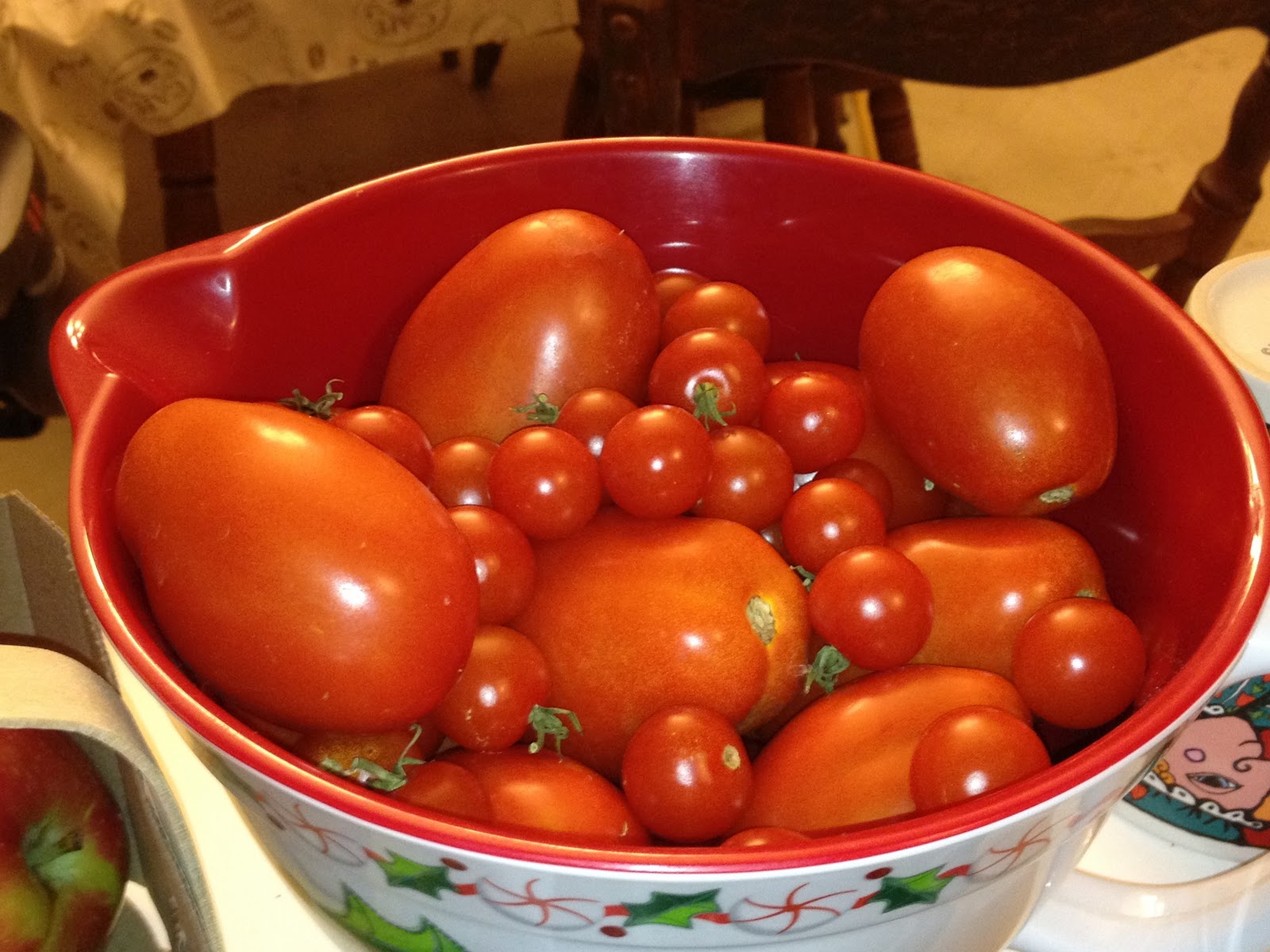
As I realized this summer by my 5 and a half foot tomato cherry plant - apparently I have a  knack for tomato gardening. Which is awesome right?

Well, that's the thing, when your plants are doing so well and have entered into a love affair with the neighbourhood bees and monarchs the resulting tomato offspring are numerous.


Which leaves the dilemma of how to go about using all the tomatoes before they go bad. I mean, lets face it- there is only so much spaghetti sauce one can make (especially on limited time). One obvious use for tomatoes is ketchup. J and E absolutely love ketchup, however the high fructose corn syrup and high salt content in the commercialized brands can cause many health problems down the road. Some include: high blood pressure, stroke, stomach cancer yadda yadda. Many of us have heard of the risks associated with consuming products containing high fructose corn syrup.


But does this mean that if we allow our kids to eat ketchup they will all grow up to be overweight, cancer ridden, ADHD monsters with high blood pressure? No, not necessarily. The key is really just moderation.

Although ketchup is high on the list of things containing both too much salt and high fructose corn syrup (ingredients that are lurking in many other products), there are some good things about it. For example Lycopene. Lycopene is the pigment that gives tomatoes their colour - and is a crazy powerful anti-oxident whose secret concentrated superfood power can only be unleashed through the processing of the tomato.

So the question becomes - how can we harness the anti-oxident power of the tomato while ridding our ketchup of all the excess crap?

Otherwise known as the whole reason behind this post.

Well, answer is simple - HOMEMADE KETCHUP! Yes, that's right. I decided to make my own. The recipe is actually very simple.

10 Tomatoes (I used Roma Tomatoes but you can use other kinds)
                             2 Yellow Onions     
                             3 gloves minced garlic
                      1 small can tomato paste (or homemade from  a ridiculous abundance of garden tomatoes....)
                             1/4 cup molasses
                             1/4 cup balsamic vinegar
                             1/2 tsp fennel seeds
                             2-3 tsp nutmeg
                             1/2 tsp allspice
                             1 Tbsp agave (you can find this in the organic section at most grocery stores)

***If you want to make a spicy version of this you can add a pinch of cayenne pepper


1. Process tomatoes and onions in food processor. 
2. Add all other ingredients and blends together until desired consistency.


3. Put everything in a pot on the stove. Simmer on medium-low until mixture reduces by 1/4.


4. Cool and jar contents. 


And Voila! Homemade ketchup - easy peezie lemon squeezie! Erm. Tomato squeezie? This recipe will thicken a bit more once its refrigerated but it remains a nice consistency. It has the triple stamped seal of approval from my three food critics - and I don't mind J and E slathering their food with it. So it's win win!


Nipples and Dinosaurs

As most of you probably haven't even  noticed, I've taken a bit of a hiatus from posting. Here I return with yet another promise of updating more often. And to mark this momentous occasion and because I really need another project like I need another hole in the head - I've decided to make a quilt. Well, not for the blog, for P, but I'm going to document my journey to quilt hood right here.

Let me start off by saying- I have no idea what the hell I'm doing. However, I've always wanted to make a quilt so I decided to throw caution to the wind. It can't be that hard right?

I've decided to document the process for a couple reasons, but mainly for shits and giggles the sakes of archiving a process in which I have no idea what I'm doing, in order to reference at a later date, when I decide to undertake this project for J and E (if I ever actually finish it).

Since my last posting a lot has happened in the world of toddlerhood here at our house. P has started transitioning into a part time home daycare, which has been a big deal for all of us. Aside from the obvious reasons of myself and G being extremely over anxious at the thought of him being in someone else's care for a couple of hours a day- there is also the issue of him falling asleep without his Eee-yats (boobie snacks).

You see, I like my co-blogger Svea, am also a perverted masochistic extended breast-feeder with wrecked nipples who is raising a spoiled perverted child with rotten teeth. Or as I like to refer to it -  a believer of self led weaning. As such, P is turning two very shortly and is still breastfeeding. At first, I was worried about how this might affect his transition into a daycare environment. This whole process got me to thinking of how I might be able to make the process easier for him - or more likely ease my over paranoid nerves into the process, as he seems to have adapted extremely well and has no need of my presence while he's there..... However, during nap time he does like to have a blanket in his hand to play with to help him fall asleep. Which is where the idea to actually buckled down and go about making a quilt came from.

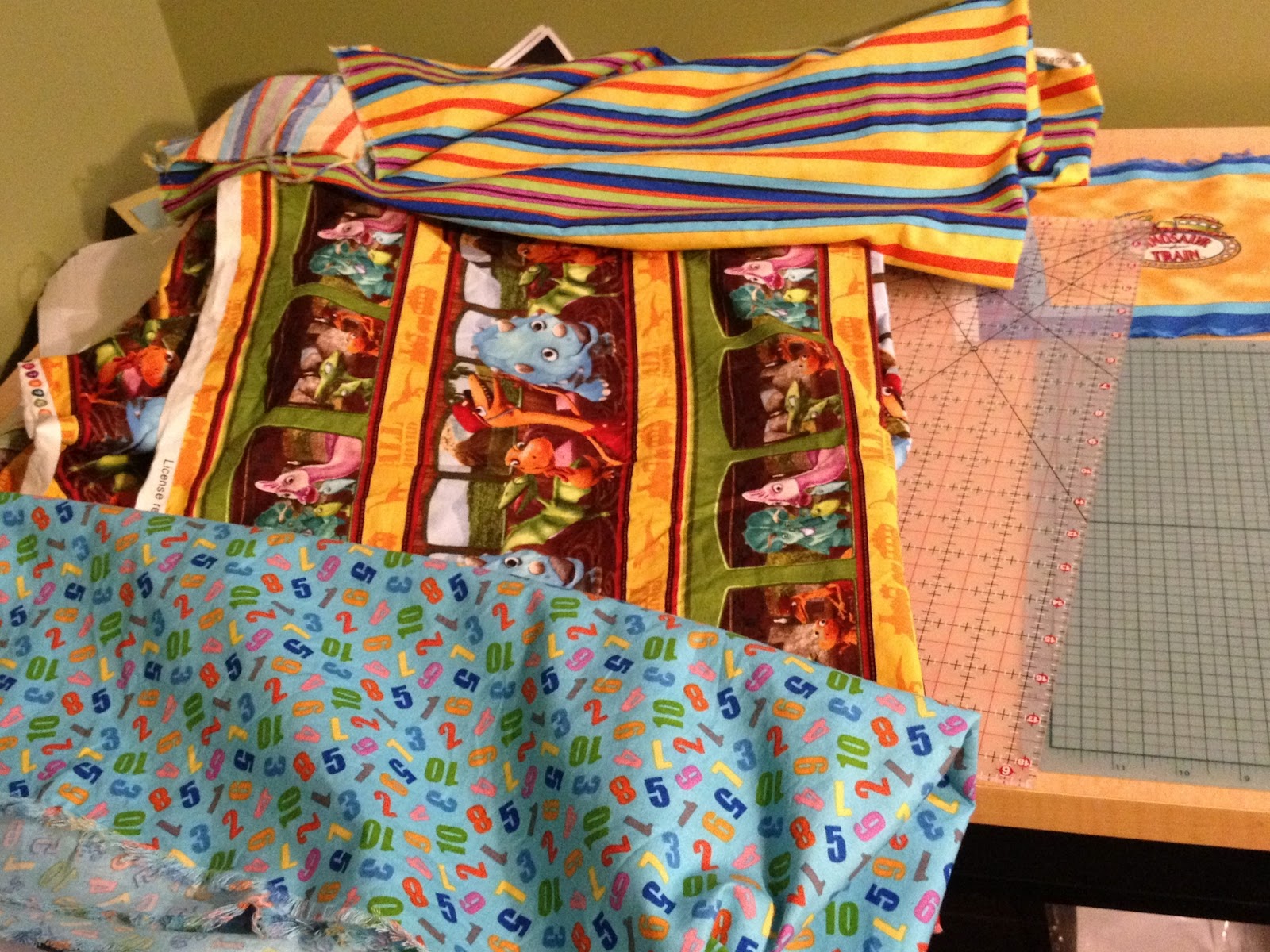
I had to decide on what the theme of the quilt was going to be. I knew that I wanted to combine really soft materials with something he liked and an educational element. I came across some very soft minky fabric that is called "dimple dot." The dots were the perfect size nipples and since P loves to hang on to a nipple to fall asleep and I wouldn't be available for nap time, why not combine his two favorite things for the theme of the quilt? Nipples and Dinosaurs! 

So I picked out a pattern that I'm going to tweak here. Found and purchased all the fabrics I felt would look good together, and essentially the idea will be to make this:


Into a quilt. Judging from what I've read it looks like alot of work. I'll be posting updates  on a semi-weekly basis on the process. Wish me luck!

Sampling and the Sensory-Rich Anal Canal, or 'On (not) Pooping in the Bath'

My sister sent me this video yesterday.


And I thought, how Ă  propos. First, because she used to poop in our bath when we were little. And second, because just that day I had jumped out of the bath in a fit of terror, holding Sweet Baby James at arms' length and saying (ever-so-sweetly, I'm sure), "Do you need to go pooping? Would you like the potty?"

You see, in our family we do a modified sort of elimination communication (yes, I said 'in our family'. Everyone in our family communicates about elimination, it happens as soon as you get married). I was supposed to write about EC a year ago when we were doing it with SBJ and it was really working, but by the time I got around to it, he had stopped. He started crawling and exploring the world and suddenly, no matter how many funny song-and-dance routines I did, sitting on the toilet just wasn't entertaining anymore.

But he hasn't pooped in the bath since he was three months old and we bathe together every day. I don't know why I was scared. I guess it was the toots I heard/felt. They seemed serious. But no poop was forthcoming. False alarm, Maman!

But I started thinking, how do we know when it's just going to be a toot, not a poop?

For answers to questions like these, I turn to Ingrid Bauer. I have a huge mama-crush on Ingrid. She lives on Salt Spring Island (I used to live there!) and she speaks French (I used to speak French!), she coaches parents (I'm judgmental!) and she must be the most amazing mother. I read her book, Natural Infant Hygiene when I took it out of the library and then I decided had to have it.


Only problem is, it's out of print and second-hand copies are going for over $200. 
Whaaaat? At least it's available on Kindle for $11. Anyway.


Here's what she says:

"Like urination, defecation involves a series of events that include muscles under both voluntary and involuntary control. As food is digested and leaves the stomach, it moves through first the small and then the large intestine. The descending colon of the large intestine empties into the sigmoid colon and then into the rectum. As the rectum fills, stretch receptors (similar to those in the bladder) produce signals that lead to an awareness of the urge to defecate. The distension of the rectum initiates the rectoanal inhibitory response. An involuntary reflex relaxes the internal anal sphincter, while the external sphincter contracts.
This process allows for the sampling reflex in the sensory-rich anal canal. Sampling, which occurs throughout the day, helps the individual determine whether the rectal contents are gas, diarrhea, or normal stool." (pp.100-101)

First of all, I would like to thank Ms. Bauer for the opportunity to use the words "sensory-rich anal canal" in a mama blog post. I don't think that would have been possible without her.

On another blog, maybe.

And second, I had totally forgotten the sigmoid colon exists! I love that little guy! In case any of this confuses (confeces?) you, here's a diagram. This is one medical image about which I'm happy there's little context included.


Image brought to you by Sitting Toilets: The Secret Very Few Know Today


So there you have it, folks. Sensors in the anal canal let you know how much it's stretching to hold in that poop. And if they're telling you it's not stretching very much, then you know it's just gas.

Aren't you glad you asked?

Sunday Brunch with Christy Anderson, OB nurse extraordinaire - Part II

Christy Anderson and a really amazingly adorable baby
Ladies. I present to you... Christy Anderson. Yes, she was over for brunch last week. But her interview is our third-most-popular post of all time, so I thought y'all might enjoy hearing the rest of what she had to say.

Christy Anderson is an obstetrics nurse with over seven years of experience in assisting women deliver their babies. She will soon enter a midwifery training master's program and is going to be pretty much the sweetest, most compassionate and no-nonsense midwife you could have.

Over last week's Sunday Brunch, Christy shared with us her experiences working at St. Francis Medical Centre, a mother-oriented hospital in Minnesota. This week she discusses the need for patient advocacy and her daily, woman-to-woman work in counteracting society's misconceptions about birth and the female body.

Gero apetito!
– Svea Boyda-Vikander
-----


SV: In the first part of this interview (click here to read) we talked about some of the amazing (well, they should be standard practice so maybe I should say, unusual?) policies your hospital implements. I'm wondering what proportion of women feel good about their births on leaving your hospital?

Water birth is amazing.
CA: When surveyed, most mothers, around 91%, would recommend our hospital to other women. I think most women have positive thoughts about their births with us though of course this is only a guess. I think introducing water births significantly increased the percentage of women who have positive experiences. If I had to estimate maybe something like 10-15% of women are disappointed in some way of their birth experience. Sometimes that has to do with having very rigid expectations of exactly how their birth will go, or not being open-minded about the fact that birth is unpredictable.

SV: Is the idea that it will go according to a plan the biggest misconception about birth that you've encountered?

CA: Not really. The biggest misconceptions are in regards to pain. Our society tells women that this is an extremely painful event and that it will be just horrible and that their bodies might not be able to do it. In reality, it is something that while intense and requiring a lot of concentration and effort, will not last long compared to the length of their life. Not to mention it can be one of the most empowering moments of their life. There are many ways to manage the intensity of pain through non-pharmacological and/or pharmacological options.

(ed. note: The book 'Water Babies' pictured above describes the work of Igor Tjarkovsky, a Soviet crazy-man who thought babies should spend most of their time in the water. Strange and all, but we have to give him props for bringing water birth to the West.)

Sims, the good doctor, is depicted
preparing to perform forced, unaesthetized
reproductive surgery on a female slave.
SV: I think Obstetrics medicine itself has a lot of these misconceptions embedded within it. Maybe this reflects its spotty history – for example, the man commonly credited as “the father of gynecology” performed forced unanasthetized hysterectomies on slaves in the American South. I wonder how this past has influenced the field today.

CA: It can change from patient to patient and hospital to hospital. In fact, patients have a lot more rights than they are familiar with and actually advocate for. I've seen patients work in partnership with a midwife a little more often than I have with a doctor. Perhaps this has something to do with the power dynamics from the history of medical care, as you said. Often patients with a doctor as provider will just do anything and everything the doctor says without any questions. This is very frustrating when the patients don’t even know how to advocate for themselves. Sometimes the patients don’t like or trust their provider but have no idea that they can transfer care to another provider or clinic.

SV: What are some of the most common mistakes women and their families make in preparing for birth?

CA: Over-preparing for birth, self-diagnosing via the internet, thinking that losing your mucus plug means you should rush to the hospital, and coming to the hospital too soon. An educated patient is better than an ignorant one but it’s important to remember that experiences written in books are just one of many paths or outcomes that can happen in labor. Sometimes, a woman will lose her mucus plug minutes/hours/or weeks before birth. This is normal. Most often it means just that: you lost your mucus plug and you will eventually have your baby! Whereas having your water break is a sign of imminent labor, this distinction is often lost on first time mothers. 
Lying on your side? Not if your bathtub is this bathtub.
But who owns this bathtub?
(I want this bathtub!)
 Often women are not well-educated on when to arrive at the hospital. They can stay home as long as they are comfortable. Our suggestion to patients is not to come to the hospital until their contractions are 3-5 minutes apart (timing from the beginning of one to the beginning of another), where each one lasts about 60 seconds, when this has been going on for over an hour and the mother has to stop and breathe through the contraction. If this is going on, it's good to get into the tub at home and get as much of your belly submerged as possible. This often involves lying on your side in a traditional tub. If the contractions get better and go away, this is just early labor. If they continue and get worse you are probably in active labor and ready to come to the hospital if you wish.

SV: Can you share a particularly heartwarming or funny anecdote from your work?

Crowded waiting room, 1950's style.
CA: I picked up an extra shift for a Friday night. I showed up at 11pm and they told me there was a patient waiting in the family lounge for a room to be cleaned. I checked and it was ready so I went to get her. Once I looked at her and then at her chart I realized that she was only 16 years old. Not only that, but the ENTIRE family lounge was full with her family and friends. I went to the room with her and we went through her admission. After that we had a long discussion on what her preferences for birth were. She preferred to only have her mother, sister, and father of the baby (fob as we call him) in the room with her. She preferred to have an un-medicated birth if at all possible.
 Upon hearing this I knew I needed to get these people involved in her birth process to help me support her because at this time she was only 4 cm dilated but in active labor. I was able to show her mother and the father of the baby how to massage her while she was on the birthing ball. After a while we changed positions and she walked the halls for a while, squatting when having contractions.
 I could tell she was progressing and now starting to work harder with her labor so I suggested we get her in the bathtub. She spent some significant time in the tub with the lights low, some flameless candles on, quiet music on, lavender essential oil on a cotton ball near her and her family next to the tub with her supporting her through each contraction. After a while she wanted to get out of the tub. At this point she was 8 cm dilated.
In case you were wondering what 4 and 8,
and 9.5cm dilated looks like!
She got into the bed and I showed her family how to push on her knees to help release some of the back pain she was having. She began to involuntary push at this point and had progressed to 9.5 cm dilated. The little bit of cervix that was left was on the anterior side so I had her flip to her hand and knees. In this position she started to get a bit nauseated, she vomited, her water broke and she was fully dilated.
She pushed about 20-30 minutes to deliver her baby boy over an intact perineum. She had complete control while pushing and listened so well to just breathe when her body was stretching. I have never been so proud of someone in my life. She delivered at about 3:30 in the morning so in only 4.5 hours she dilated 6 cm, and pushed her baby out. She did it just the way she wanted to, with her family all there and supporting her. It is amazing what a woman/teenager can do with the right support! I feel so good about being there for her and showing her she was able to do it.

SV: That's a great story. I have goosebumps. I feel this is the kind of birth experience we should all have access to – but when you're part of a marginalized population (being a young mother, for example), so much choice is taken away from you. To sum up, what has working in this field taught you?

Little children are so good at surrendering.
The average grown-up needs a little support.
CA: Patience, how to work well with others, the amazing power of the female body, that the mind might trick you while in labor. Just at the point when you feel as though you can’t go any further or any longer, this is when you need to continue as you are getting close to the end. Often, if I can get a patient to believe me when I tell them this, then surrender and go with the process, they will deliver quickly. It's a beautiful process and I feel honored to be a part of it.

SV: Thank you so much for sharing your education and experiences!

Why do babies say 'nana' for banana...

...But not 'berreez' for 'blueberries'?*


It's simple, really.

Most words in English have the emphasis on the first syllable. Like the words 'English' and 'emphasis'. Also, 'syllable'.

Babies are smart. So when baby hears you say 'banana', where the emphasis is on the second syllable ('baNANa'), they think you're just making a funny random 'ba' sound before the real word starts. Which is 'nana'.

I explained this to somebody and he was like, "Nah, kids are just lazy" and I was like, "You're an idiot lazy." Because guess what? The same thing happens for 'computer' and 'mosquito repellent'. Or, as my 5 year-old friend Amanda (who was so not lazy) used to say, "'squito 'pellent'."

This (the joy of language development) is at least half the reason I had a kid.


Banana from Svea Vikander on Vimeo.

*In fact, 'blueberries' is a bad example. It's a compound noun. When nouns (or in this case, a modifier and a noun) are smushed together like that, they both take a stress. This helps to differentiate their meaning, the difference between, "Oh, what a nice, green house" and, "Oh, what a nice greenhouse" (where both 'green' and 'house' are stressed and yes, greenhouses sure are nice). Basically, anything else would have been a better example. I just love that picture of SBJ with a blueberry mouth.

August 6-12th: OB Nursing, Extended Breastfeeding, Petting Zoos

New this week...

OB nurse extraordinaire (and future midwife-in-training) Christy Anderson discusses the forces that brought her to the placenta-eating dark (crunchy) side. Her Sunday Brunch interview has been so popular, she's coming back next week to talk more babies, birth, baby-friendly hospitals, and how she can just tell a woman is in transition.

In honour of World Breastfeeding Week, Svea collects 11 of the most popular objections to extended breastfeeding and applies them to herself. Breastfed until over the age of 3, she has undoubtedly become the friendless misogynist perv these concerned citizens predicted.

It's a flashback to the 1980s on Too Hot For Stroller, where a young mama takes her kiddos to the petting zoo, managing to look awesome while keeping her baby from the nuzzling mouths of sheep.

Week of July 29 - August 5th: Post-Colonialism


Post-colonialism. Because yes, you really need to read about exoticizing the Other during baby's nap-time. Sarah writes about the loss of archival heritage in Canada, and how it fits into the colonial mindset; Svea opines on the crappy ways Westerners take photographs of 'exotic' people.

And this week features a picture of... a white woman crouched down in front of the fire with a baby strapped to her back in an exotic piece of cloth, from a 1990s sporting goods advertisement in Too Hot For Stroller.

The DANGERS of extended breastfeeding, or Look How Bad I Turned Out

My boobalicious profile picture. Hallowe'en.
SBJ is Sir Winston Churchill.
Me? I'm Sir Winston Churchill's mother.

This week, as you may know from every nursing mother's boobalicious profile picture, is the WHO's World Breastfeeding Week. I wanted to write something about 'extended' breastfeeding. 'Extended' breastfeeding is any breastfeeding that happens after the normal time for complete weaning. Yeah, normal, our favorite word here at Mama to Mama. According to Our Babies, Ourselves, the worldwide average age for total weaning is just over four years old. So that could be considered normal.

BUT In America, only about 75% of babies are nursed at all, and most of those are weaned by six months. Normal takes a nosedive.

People have all kinds of ideas about what constitutes a good age for weaning: when the child is old enough to ask for it, he's too old to nurse (babies who master Baby Sign Language for 'milk' at the age of five months? They're SOL); when mom goes back to work (ummm… in the USA we don't have maternity leave, some moms go back before their stitches have even healed); and when the infant is ready and willing to eat other food (because breast milk is this crappy not-food, why deprive your kid of the real chicken mcnugget experience?).

From the other (crunchy, placenta-eating dark-) side, some people prefer to call it 'full term' breastfeeding, to reflect the understanding that infants and children evolved to drink it by the tonne. Babies like it. Toddlers find it comforting. It keeps mama around and can even delay the conception of a pesky younger sibling. Most importantly, kids don't have fully developed immune systems until they're about 6 years old—which is, not coincidentally, about the time their 'milk teeth' fall out. Breast milk provides all kinds of immunological benefits, which is why when the nuclear apocalypse comes, and everyone's richitic and diseased (thank you, Cormac McCarthy), y'all are going to be lining up just to get a squirt of the milky goodness. 

And it's controversial and Time magazine cover and yadda yadda yadda (more about this later). So I wanted to write something about how moms who breastfeed for years are not the devil incarnate. But our baby isn't quite an extended nurser, yet. He's just a seventeen month-old who loves his 'la-las' more than life itself. Also, I just may be the devil incarnate.

McBride Park playground, Vancouver.
See the blue elephant with a slide for its trunk?
My dad and I campaigned door-to-door for that.
It was my first, and only, triumph in community activism.
And then it dawned on me: ME! Me, I was breastfed for a long, long time. My dad says four years at least, my mom says she doesn't remember. I have a vague memory of getting hurt on the McBride park playground and running to my mom to nurse. So I'm going to put it at about 2.5-3.5 years. Following are some of the accusations leveled at parents who do full-term breastfeeding, and my analysis of whether I turned out as bad as they think. The best ones came from here (http://bethesda.patch.com/articles/poll-is-extended-breastfeeding-a-problem-or-solution).


Objection #1: It leads to spoiled kids


Becky D, RN
4:46 pm on Wednesday, May 16, 2012
...I for one am sick of hearing about extended breastfeeding. It is just what it is, extended past what is recommended. Parenting is about setting limits and boundaries. How backwards to let the child decide...Breast milk is for babies. NOT children.!

And, 
If I relied on my sons to tell me when they were finished breastfeeding, I'd be in real trouble! You can't let an addict decide when it's time to stop!  (Clorissa)

Well. Really.
Am I spoiled? Currently, yes, though I like to think it means something if I know I am. Was I a milk, or any kind of addict as a kid? In a word: no, except that I have always loved sweet milky things. Cheese, yogurt, ice-cream, mascarpone, whipped cream, milk shakes, butter, icing, whole milk… mmmm….

What's better than milk? Milk with strawberries!
In all seriousness, I was such an annoyingly well-behaved kid that it actually cost me friends. As I have told my many therapists many times, I feel like I was born to defer my own pleasure. Case in point: when I was eight years old, we went strawberry picking at one of those you-pick-and-pay-by-the-pound farms. I picked a lot of strawberries. When we all met up at the end of the afternoon, everyone else had red rings around their mouths. I was like, "Wait wait wait—you guys ate some?!" It hadn't even crossed my mind.


Objections #s 2 and 3: If it's a boy, he's going to be perverted, if it's a girl, she's going to be a lesbian.

My mother also said that my daughter might grow up to prefer women over men b/c she breast fed so long. I dont' see that and I really hope that's not true. (Kendra)

The perverted part, folks, is 100% true.

And for those who find this concerning, let it be known that I am a married SAHM, in a monogamous relationship with a man, who was born with a penis. In case you thought that was your business or something. Also, what's wrong with lesbians? Nothing, that's what.


Objection #4: It means the mom is perverted.

Karl Schuub
3:47 pm on Friday, May 11, 2012
That woman has issues that have little to do with being a mom. Sorry only a sick freak would nurse a kid that can verbalize they're hungry.

My mom is a lot of things. 'Sick freak' is not one of them. She is a very nice woman, with a lot of opinions. She's comfortable with her body and has a terribly wholesome view of sexuality (please note: if you're reading this, and you've had sex with my mom, I prefer to remain deluded).


Objections #s 5 and 6: It will cause co-dependency and it's only fulfilling the mother's needs

Ashley
8:29 pm on Friday, May 11, 2012
I have no problem with women breastfeeding babies. Babies are mean't to be breastfed, toddlers are not….I feel like if they continue to breastfeed after the kid is a toddler it's not as much for the benefit of the kid (I actually believe it will cause co-dependency) but more for some sick need the mother needs to fulfill in herself.

It's true that I do love intimate relationships, and I do love my mom. But I also happily spend time alone, like the time I spent three months traveling through Sri Lanka and stayed in noble-silence meditation in an isolated Buddhist nunnery, bitches. As a kid, I walked alone to and from school every day, babysat my sister, and had my first job at age 11. 

And fulfilling the mother's needs… What needs might these be? There's a hint of something sexual in this rhetoric ("little to do with being a mom"), but nobody ever really pinpoints it. If there's a "my child nursing me" fetish, I have yet to come across it. Maybe it's more about closeness: mother has a need for physical contact for which she is using her child when she could be using more appropriate sources, like her MAN (who has a penis). I can't answer for my mom, but she seemed pretty happy in the ten years she spent without a significant other. She never seemed starved for affection, and I never felt it was my responsibility to fulfill her. Sometimes men would ask her out and she'd be like, "I dunno… do you play scrabble?"

From my perspective, it's like this: I like cuddling my mom. I wish I could cuddle her more. Maternal touch helps to calm the autonomic nervous system, and decreases the risk of all kinds of chronic health conditions (e.g. those related to stress: eczema, asthma, insomnia, etc.), most of which I had anyway. Plus, I was basically the cutest kid ever. My mother's need to hold me makes perfect sense.


Objection #5: Breastfeeding isn't sexy. 

Sean Tully
8:58 pm on Friday, May 11, 2012
Breast feeding really isn't the issue. Time's cover is. As mentioned above, it is exploiting the issue and trying to sex it up. Breast feeding really isn't that sexy.

First, I disagree with this sentiment—in the sense that breastfeeding is beautiful and demonstrates the wonders of the human body, it is sexy. This is not to say that you, Sean Tully, are entitled, simply by virtue of your manhood, to a world full of women (including my mother!) whose only aim in life is to give you a popped fly. And guess what? She totally could. My mom is the hottest sixty-something I know. She could give Yoko Ono a run for her money, she looks that good in a miniskirt.

I love this woman so much, I named my son after her.

Objection #6: It's child abuse.

Get Real
12:15 am on Saturday, May 12, 2012
This is sick and disturbing on so many levels, it is borderline child abuse.

This is really just a variation of earlier accusations, but it's so egregious that it deserves its own column. Fuck off, child abuse?! Get real, Get Real. My mom could have BF'd me until I moved out at eighteen and it never would have come close to any of the crappy, crappy things that can happen to a kid.

As Svea Vikander, I feel that I am the authority on abusive experiences in Svea Vikander's life. Extended breastfeeding? Not one of them. 


Objection #7: It's impossible to wean an older child.

Another problem is that it is often very difficult to wean an older child. He understands that your breasts are available – they have been available for as long as he remembers – so why stop now? He does not understand or want to relinquish that special relationship between you and him. Unlike babies, an older child is more verbose and can whine, argue, and negotiate for days and days. Some children can be bribed. For example, he will stop nursing and in exchange you will buy him a substantial toy that he has wanted for a long time.  (http://www.breastfeeding-mom.com/extended-breastfeeding.html)

I don't remember my mom weaning me, and she doesn't either. Obviously, it wasn't too traumatic for either of us. To this day, I await my substantial toy. Whatever that is.


Objection #8: It's going to raise a child who objectifies women.

Children who experience prolonged breastfeeding also tend to view their mothers, and often women in general, as mere objects who provide, not as people. (http://www.circleofmoms.com/breastfeeding-moms/breastfeeding-at-8-139114#_)

Yes… I definitely see my mother, and women in general (including myself) as mere objects. Who provide. Milk, optimally. I believe women should just put out (milk) or get out (of the fridge). I am... at a loss here...?

Aside from the fact that my favorite joke is, "How many feminists does it take to screw in a lightbulb?" (answer: That's not funny), I am a REALLY FUCKING SERIOUS FEMINIST. I believe in the value of women's subjectivity, stories, experience and empowerment.

The author of that comment goes on to say, 
If its okay to see, touch, and suck mommy's breast, why can't i do the same to other women? And as they get older, why isn't it okay for others to do the same to me? And I know that girl said no, but If she loved me…

This has to be the craziest one yet. It's so full of baseless fears and assumptions about male sexuality, I don't even want to touch it with a ten-foot pole. Which is why I'm going to devote an entire blog post to it someday soon.


Objection #9: There is no nutritional value in breast milk past one year.

I don't really know how to assess the nutritional benefits of my full-term BFing, but I do know that I was a relatively healthy kid. I had shiny hair and strong nails. I did lots of climbing trees and wandering the woods, but I never broke a bone. 

There is plenty of nutritional and immunological value in breast milk, which is why those most vulnerable members of our species are hardwired to want it (newborn babies will literally crawl to find the breast. Newborn babies don't even know how to crawl! Encroyable!). People with autoimmune deficiencies can be found on milk-bank forums, willing to pay good money for this 'liquid gold' (...white gold). And come on. Do we really have to argue about this one? This is, like, the one thing everybody knows. As my friend Sasha says, "breast is best, and all that jazz."


Objection #10: It will rot your kid's teeth. And/or it will wreck your nipples, because she has teeth. And other things about teeth.

If the kid has teeth it should be eating solid food. This picture is disgusting. (Ashley, above)
...from a dentists perspective a baby should never nurse that long ever. (belltree, relating her sister's statement, http://www.mothering.com/community/t/1284792/nursing-a-toddler-bad-for-teeth)

People say that extended breastfeeding will magically rot your child's teeth (you know, the ones that are going to fall out anyway), and Whoopie Goldberg said that she wouldn't nurse her newborn because she was born with a tooth. I got my one and only semi-cavity (I kind of think the dentist was just trying to sell me some sealant) at the age of 21. I didn't go back to the dentist until my then-fiancĂ© paid for it when I was 25 and the hygienist was all, "Your teeth are great, you make my job so easy," so we just talked about my wedding plans for the rest of the hour. 

And about the rest of it? I could be wrong, but as far as I know, my mother's nipples are just fine.


Objection #11: It's bad for the child's social standing.

Donna
10:27 pm on Friday, May 11, 2012
I feel so sorry for this boy. He'll probably run away, dye his hair, and change his name first chance he gets. Can't say I blame him if he does.

Nobody ever made fun of me for being Milktastic Svea or anything like that. They had more obvious targets, like the fact that my mother rode around town on an oversized tricycle.

This is the same argument that's been made against LGBTQ people raising children, and people with physical disabilities raising children, and basically anybody else who doesn't fit the boring norm, and it's bullshit. If you think you can magically do everything right so that your kid never gets made fun of, never gets picked on, never gets left out, you're deluding yourself. 

Instead of trying to fit in, try this: think about the society you want to live in. Then act like you're part of it. That's how change happens. 


Milktastically yours,

Svea V

Sunday Brunch: Interview with Christy Anderson, Obstetrics Nurse Extraordinaire

Christy Anderson, OB Nurse

I first met Christy Anderson, an obstetrics nurse and a dear friend, in the early summer of 2009. I was a few weeks pregnant but (having taken one of those super-expensive, high-tech pregnancy tests purchased in a Manhattan pharmacy) I didn't know it. My then-fiancé and I were driving around the US, stopping for beer and hashing out such monolithic couples' disagreements as whether or not we should have a wedding and if we did, if we should have a band, and if we did have a band, if they should play classical music or songs more germane to our generation.

But I was planning to be pregnant soon so I picked Christy's brain over a campfire and a bottle of wine(!), looking for her educated opinions about the birthing process. I like to think that, in the three years since, Christy and I have both experienced a sea change toward natural birthing processes—she, from an informed place working within the medical system; and myself from a general obliviousness and belief that it's all a bunch of hippie hoo-haw. Christy's entering a nurse-midwifery master's program in January and I keep telling people I lured a nice nurse over to the placenta-eating dark side. 

For this week's Sunday Brunch, the first of a two-part interview, Christy talks about the amazing hospital she works for (seriously, they offer prenatal yoga. how sweet is that?) and her experiences as a compassionate and fiercely hard-working obstetrics nurse. Her later interview will examine some of the reasons she is looking to further her education in the midwifery field.

Buon appetito!
– Svea Vikander

------

SV: Let's start at the beginning. How did you know this was the field of nursing you wanted to go into?

Christy, after assisting in the delivery of her cousin's baby, Bree.
Let it be said... Newborn babies sometimes cry too!
CA: I didn’t immediately know. In high school I thought I wanted to be a pediatrician. I was so lucky to be able to job shadow a wonderful pediatrician. I learned a lot of great things from her but the most powerful lesson was that I didn’t want to work in pediatrics! Crying babies with ear infections all day was not my idea of a great job. However, I knew that I wanted to work with babies so my next thought was about newborn babies. This led me to do a summer job shadow with certified nurse midwife named Lori. I spent a good portion of my summer with her and fell in love with the job and the amazing process of labor. From then on I knew I would go to nursing school and one day become a certified nurse midwife. 

SV: And now that you're doing it, what's it like to be an OB nurse? What does your typical shift look like?

CA: I work 12-hour night shifts, which means I arrive at work at 7pm and leave at 7:30am. I wear one of three hats while at work during these shifts. The first would be as a charge nurse. This means I answer all phone calls and triage all patients who come in who might think they are in labor or are having some type of pregnancy problem. I am responsible for knowing what is going on with all the patients on the floor at all times, assisting other nurses with help when they have questions, and attending all births to be the “2nd nurse.” Being a 2nd Nurse means I am there to care for the baby once it is born for the first half hour. As a charge nurse I am also responsible for staffing the unit.
The second hat that I could wear would be a labor and delivery nurse. This is by far my favorite hat to wear. It is during this time I am able to really connect with my patients and help them have the birth experience that they are hoping for. This is where I am responsible for the laboring mother, supporting her during her labor.
The third hat I might wear would be as a post-partum nurse. During this time I am responsible for either three or four mother/baby couplets. I help facilitate bonding, breastfeeding, and teaching a wide range of infant and mother care practices. I also assist the families to finish some of the hospital paperwork that needs to get done so they can go home with their babies.

SV: Shift work is so hard. Especially all night. What's the hardest part about your job?

CA: Breastfeeding assistance. No matter what position I put myself and the mother in, it always hurts my lower back! So that is a personal thing. In general, though, nurses can find it hard it to make a connection with the patients. Often you only have minutes to meet the patient before almost immediately being in an emotional and stressful situation. You have to get them to trust you and make a connection as soon as possible. Sometimes that is hard to do at the end of a labor that is very intense or when patients come in thinking we are the enemy. Patients’ attitudes are often the result of thinking we are merely agents of the hospital’s policies, here to enforce practices that they would not choose for themselves, rather than as a partner in their birth experience.

(from the Aspen Women's Health Centre, via Denver Doula)
It's nice to know not all OB Nurses are created equal.


SV: And, in your case at least, this simply isn't true...

CA: Well, no. The thing is, I can't say our hospital, St. Francis, is typical. Recently I have been reading more blogs, hearing from friends, and attending more conferences and have noticed there is something special about the hospital I work for. We are a regional hospital and usually do around 1200 deliveries a year. Our providers consist of OB/GYN’s, certified nurse midwives and some family practice physicians. Within the last year we have started offering water births with our midwives. A few months ago we began to use aromatherapy to help our patients with pain, stress/anxiety, nausea and relaxation/sleep. A large percentage of our nurses are trained in integrative health techniques such as: massage, guided imagery, meditation, music therapy and deep breathing techniques. These have proved to be very helpful for our patients. We also have a lot of our nurses trained by Gail Tully and her Spinning Babies techniques. We have a different approach from most hospitals when it comes to cesarean births. I think some of this has stemmed from a few of our nurses, personally, having bad experiences at other hospitals during a cesarean birth.

SV: That's amazing! Policy informed by people's actual lived experiences!

CA: (laughs) Yes. Another thing that has shaped this new approach is our belief in the research that supports immediate skin-to-skin contact between mother and baby. Most hospitals during a cesarean will show the mother the baby quickly if at all and then take the baby away. The mom will then see the baby again only after her recovery phase. Our hospital is very different in that aspect. If a patient is going to have a cesarean birth, myself or another labor nurse plans to be in the operating room the whole time. Once the baby is born the doctor places it on the warmer (they are sterile and need to place it in another safe sterile place). As the nurse, I will wipe off the baby quickly and if any stabilization needs to be done, it will be done quickly. Then the baby is placed skin-to-skin on the mother’s chest as long as she likes while the surgery is finished. Some mothers choose to do skin-to-skin the entire time, others choose to have us weigh and measure the baby in front of her while still in the operating room.

SV: That's exactly what maternal-issues therapist Helen Dunn recommended when I interviewed her, in terms of dealing with C-section trauma: giving the mother choices. It can help to give her a sense of control and reduce the incidence of PTSD.

Want to learn more about V-BAC, TOLAC, and the BAC-lash?
Check outICAN: International Cesarean Awareness Network
CA: It also helps to simply ensure that she has the birth that she wants – or as close to it as possible. After the surgeon is finished the mother is moved to a new bed and then mother and baby are transferred back to their room for recovery. During this phase the mother can continue skin-to-skin contact if desired or start breastfeeding. Breastfeeding during this time can sometimes be difficult as the mother is in a mostly reclined position. Nurses have been known to stand and hold the baby in a good position during this time, in order to better facilitate this first breastfeeding. I actually do not think elective primary cesarean birth is something that should be an option to people. I think it might be a while before that is a rule.

SV: Really? No elective cesareans? Why is that?

CA: I think often women make this decision based not fact or need but more of a socially accepted norm these days. Some will choose it because they don't want to push or don't want to ruin their sex life. These seem like trivial things when you look at the recovery period and increases in potential complications with next pregnancies and next potential cesarean delivery. Often times once women are educated on what it truly means to have a cesarean and what it could mean for future deliveries they realize this is not the easy way out. I think there is a time and a place for elective cesareans for those people that aren't just looking for the planned delivery to try to fit it into their schedule. I would hope that any provider that is willing to offer an elective cesarean also talks about the potential risks, what this means for future deliveries and the possibility of emotional distress that can happen between a mother an her new infant from this type of delivery.

SV: And I guess something a lot of women aren't told is that having one C-section will make their later labours more likely to end in C-sections – in fact, a lot of doctors won't do 'VBAC' (Vaginal Birth After Caesarian), they insist you have another C-section.

CA: There is a time and a place for a trial of labor after cesarean (TOLAC), which could become the VBAC you're talking about and in certain situations I would really recommend it. Sometimes, I have a hard time recommending it to friends who ask as I have seen it go really bad really fast, but that's a very small percentage.

SV: What about the commercial aspects of C-sections and birth interventions?

Vintage shot of Ina May Gaskin
in The Business of Being Born
CA: Many people have seen the movie The Business of Being Born and I have to be honest – I only watched it for the first time last night! As this movie insinuates, a lot of hospitals are keen to induce their patients, give them epidurals and offer elective cesarean births or at least push towards cesarean birth when it is convenient for the doctor. This, however, is not my hospital. We now have a policy on the induction of labor, which reduced our induction rate significantly. We use pitocin conservatively. As more of our nurses become competent in the above techniques, we are having more and more “natural” un-medicated vaginal births. That being said, we are still a hospital and have certain policies and procedures that some may consider controversial. But we have a much more holistic approach to labor and delivery than other hospitals.

SV: I remember when we first met, you said that you'd seen a doctor write 'birth plan' on a patient's record, under the reason that a labour had failed to progress. What are your personal feelings on birth plans?

CA: Birth plans are very interesting. It is my recent opinion that they should be called “birth preferences.” The semantic of birth “plan” means your labor will be this way and you will not stray from it at all. Sometimes that is fine but sometimes it needs to be a little more fluid. One of my favorite quotes from a fellow co-worker is, “I have read your birth plan and it is so very lovely and I will do everything in my power to have it the way you prefer. However, sometimes we make plans and God laughs.” I think this sums up a lot because we can plan all we want and sometimes things just don’t go the way we were planning them to go. I think the best thing to do is have an idea of how you want things to go and inform your provider and nurse of these things. A written plan may not be necessary.

SV: I guess that makes sense if you really trust and feel connected to your care-providers. What about rooming in?

CA: Rooming in is great, it facilitates on-demand breastfeeding and attachment. We promote it but also offer the nursery at night. More often than not, parents take advantage of the nursery. I think they think I only have one or two nights that I might be able to do this so I might as well do this after having had such a long labor. If I had to guess, at our hospital at night maybe about 70% or more of parents send their baby to the nursery, to be brought back when the baby is ready to nurse.
Christy, during The Night Eight Babies Did Not Room In


SV: Have your ideas about pregnancy and childbirth changed over the course of your education and career?

CA: Yes, looking back over the last seven years, my thoughts have changed quite a bit. When you start a career like this there is so much information to learn that it is easiest to learn the black and white parts of the job. The more mechanical things, such as electronic fetal monitors, starting IV’s, epidurals. As I became more proficient in these areas, I started to work on really understanding and being able to support natural childbirth. I have always loved it and I’m in awe of it. I am the first to volunteer to take natural birth patients when they arrive. I am just truly amazed by the human body and how it works. I have seen so many of them now that I can actually hear when a woman is ready to give birth. I love that even though every woman is different the body is so similar that at the end of labor you can just hear when a woman is going to deliver. It isn’t always necessary to do an exam... you can just have a sense of it.

SV: That's amazing. I remember when I was in labour with Sweet Baby James, the labour progressed much faster than we expected. Zu called my mom to ask her to get the car ready in an hour or so. She told me later that she could hear me having contractions in the background and she 'just knew' that I would have the baby very, very soon so she went to get the car started right away! (she forgot the keys and had to backtrack to her place in the middle of a Montreal February night, but that's another story). That kind of primal knowledge really is incredible.

CA: Exactly. And that's what I want for my own births. When I first started I thought for sure I would want to have an epidural when I have a baby of my own. As I have grown in the profession and my own learning I think I’m going to trust my body to tell me what I need.

SV: What kind of a birth do you hope to have? Where would you hope to give birth?

CA: I hope to have a very open mind in this situation. I would like to keep my mind and body healthy and continue to practice yoga in preparation. I would like to think I would be able to have an un-medicated water birth but I am going to try not to have any expectation on my birth and just see what my mind and body need at that time. I feel very safe in the hospital that I currently work. I work with some wonderful midwives that I would like to provide my care. I think I could have the birth I hoped to have with them with the medical backup right there if needed. Not to mention to have all my wonderfully supportive co-workers there to help me through it.

SV: That sounds great. I'm sure that your experiences from working in labour and delivery will inform your birth, and your birth will then inform the further work you do.