Book Review: On the Night you were Born by Nancy Tillman

Title: On the Night you were Born

Author: Nancy Tillman

Publisher:
Feiwel & Friends; First Edition edition (Oct 17 2006)

Intended Audience: Babies, toddlers, anyone that loves reading children's books

Genre: Children/Baby/Toddler


One sentence that particularly stands out: "On the night you were born, the moon smiled with such wonder that the stars peeked in to see you and the night wind whispered, "Life will never be the same.""

What I loved: The beautiful sentiment expressed throughout the story. Tillman is also the illustrator of the book. She provides illustrations layered with both visual and textual trinkets that are simply breath-taking.

What made me want to cry into my burpee cloth: The last page that utilizes "heaven's trumpets" to further signify the special nature of the child's birth.

How many M's?: MMMMm (4.5/5)


Nancy Tillman is perhaps (if I were forced to choose because there are so many) one of my favourite children's authors. She has authored and illustrated books including Wherever You are My Love Will Find You, Tumford the Terrible and her most recent book: The Crown on Your Head. One of the reasons I love her books so much, is that they encapsulate and translate a very important message to children: that they are loved. Sure we hope that all children are getting this message from a stable source in their lives, but unfortunately this is not always the case. For those children and parents that want to convey in picture and story form just how special their children are, Tillman offers a neat oeuvre of books to do it with. On the Night You Were Born is one of those books.

I must confess, I have an undying love for children's books. Not just those with lovely rich story lines, but ones that have beautifully rendered illustrations. No one needs me to get into how important children's literacy is, so I will save that schpeal for another post . Due to the cost associated with children's books, I'm not always able to just go out and buy them new. So I generally troll community book sales, garage sales, or go to the community library - choosing the ones carefully that I purchase brand new. That being said, after sitting on my book wish list for a few months, I went out and bought On the Night You Were Born. And it was worth every penny.

Although On the Night You Were Born is available for sale and purchase to many readers, it reads as if it was specifically written for each individual child. It tells the story of the night when everything changed in the world, the night that particular child (the reader) was born. Birth, perhaps one of my favourite (or over-discussed) topics, is a special, emotional, raw experience for birth and adoptive parents alike. This book is successful in capturing not only how special and unique each individual child is, but also the sentiments of new parenthood and the emotions and joy that is associated with the moment that you see your child for the first time. All while remaining relatable for children.

The reader gets to read how, upon the birth of the child, the whole world changed. The whole world was joyous:

"So enchanted with you were the wind and the rain that they whispered the sound of your wonderful name."

and the animal kingdom came out to partake in the celebrations:

"When the polar bears heard, they danced until dawn."

While the book maintains a continuous story line, it also has an interactive component that encourages the reader at certain points to take part in the narrative, for example, by "wiggling their toes."

It also comes in a sturdy, durable, board book version! Which is another one of my favourite aspects this book.

Now on to the not-so-favourite parts of the book.

First off, let me start off by saying that I think this book should be read by everyone, adults and children. However, in terms of reading practicality, this book is great for reading to a baby, or a child who is around 5 and up. It had a bit of a lengthy storyline for- say- a 14 month old who is on the go. P absolutely LOVES books, of all sorts, and is very patient to sit down and read through several of them at a time, but I find for us, this narrative is a bit long for him to sit through the whole thing without wanting to move on to other shorter books. For this particular case, there is a recordable story version of the book, or you can also get it on CD.

My only other quam with the book, is the last page. It states that "heaven blew every trumpet and played every horn on the wonderful, marvelous night you were born." Why would I have an issue with that? You might be asking. Well, its simple really - I'm not a fan of religious indoctrination, especially not at such a young impressionable age. That's not to say I have anything against people who are religious, or practicing religions - I feel that ones spirituality is a personal and private thing that should come about when they are old enough to make their own decisions about which religion they want to subscribe to (if any at all).

I think that the narrative of this book does a fabulous job of conveying how special, unique and loved the reader of the book is, without having to bring religion into the mix. I would not however, let this aspect of the book, especially since its only the last page really, discourage me (or anyone else) from reading the book. In our house, we just simply change the line to say "the universe" rather than the heavens - problem solved.

So, go on, go out if you don't already own a copy and pick up On the Night You Were Born - because lets face it - you know you want to.....


Moving and Shaking- Milestones


First off, let me start by saying, milestones are relative. When you become a parent it takes a kid or two of experience under your belt before you really understand that obsessing over stages of development is bad for your health and adds more stress.

Sure we know that logically every child will not walk at the same time, at the same age, and people (including paediatricians) say these things are just meant as markers rather than actual truths- but that does not stop us as parents from checking out those "milestone charts." Its a natural human response to want to see what is considered "average" by whoever makes these charts. With the milestone hype, it is sometimes easy to feel like where our child places in terms of milestones is a direct measure of our skills as parents. So, as our friends talk about advances their kids are making -or in some cases, that neighbour who is always talking about how their kid is so much more advanced than everyone else's (yeah you know the one - they talk about how their 6 month old counts to 12 already, and will surely be able to recite the periodic table of elements by 9 months)- we sit and tell ourselves that every child is different, while secretly at some point, we will go home and sneak a glance at the chart.

Like it or not, as human beings we are constantly looking for ways to measure our place in the world in order to gain a sense of who we are as individuals. These types of measurements act as a gauge in identity formation, allowing people to position themselves in terms of "averages" and in many cases encourages the desire to fit into specific binaries (ex. gender). The problem with this type of self assessment is that it inevitably leads to othering because not everyone fits the "average."

When parents start linking milestones with parenting skills they enter into an emotionally draining game of self esteem roulette. This type of association can be immensely draining when coupled with the stress that already comes with the parenthood welcome package. Even more is the fact that not every child will walk, or crawl, or in some cases due to medical reasons, have the chance to do either. Where does that leave those children?

If these types of measurements "not meant to be worry mills" are everywhere a new parent looks, and things begin to be measured in terms of percentiles (ex. P ranks in the 50th percentile for weight, he weighs the same as 50 percent of kids his age), what happens if our child does not "measure up?"

I found that with J I was always worrying. Parenthood was new to me. I was scared and despite the best efforts of the authors in the baby book market, kids just don't come with manuals. It really wasn't until E came along that I was able to really observe and appreciate that each child is different and unique in their own way. With P I have become even more confident -or perhaps comfortable - in my own abilities as a parent, that I don't feel the need to obsess over milestones.


According to one milestone chart P should have been standing, crawling and cruising furniture at around 9 months. Well he wasn't. In fact he never crawled. He's a scooter. Despite the well -however misplaced- intentions of family members trying to coax him to "crawl the right way", he prefers to get around on his butt because this is what he feels is the most efficient for him. For him, scooting is the right way.

P is now 14 months old. Two days ago while checking my emails I noticed the familiar feeling of P gnawing on my leg. This is a pretty common occurrence and not unusual for him to do at some point during the day. But this gnawing was different. I realized that I was not sitting on the floor with him this time, but sitting on a chair, and he was still able to gnaw at the height of the chair. As I looked down I saw he was standing, on his own, gnawing on my leg and he couldn't be more proud of himself. Since then he has started scaling the furniture and trying to climb various things in the house.

Is he walking yet? No. Am I worried? No. We don't want to rush P. Instead, provide him with a supporting environment that allows him to feel comfortable and gain confidence learning how to do these things at a pace that is right for him. On his own time. Because he is unique-not average.

Rather than obsessing and comparing P's progress to the "average" and then worrying because 3 other children his age are already walking, I choose to use my own scale of measurement, which involves asking myself a series of simple questions.

Is he happy? Check. Is he healthy? Check. Are his needs taken care of? Check. Is he loved? More than he will ever know.


Sunday Brunch: First Interview with Mica Vincent, Speech-Language Pathologist

Language development is the most amazing thing. Watching (hearing) 'drop-sheesh' turn to 'wa-wagh' turn to 'gar-bage' is what I looked forward to most when I was eight months pregnant and feeling like, as Sylvia Plath puts it, 'a melon strolling on two tendrils'. But what happens when language doesn't seem to be developing quite right? If your baby doesn't babble, your toddler isn't saying "me do it!", or your young child can't express herself, you're bound to be worried.
Enter the Speech-Language Pathologist, a healthcare provider who will work with your child to assess and treat their language and speech communication difficulties. And then, we all rest easy, right? Not so fast. Speech therapy, as our Sunday Brunch guest Mica Vincent tells us, is more than just correcting lisps. It's like that line in The King's Speech. The movie was a completely inaccurate view of speech therapy, and also of the history of the British monarchy as relates to Nazism. But I'm sure you remember the part where the king describes his cruel early childhood nanny: "she-she wouldn't feed me". Difficult stuff. Sometimes a speech therapist needs to be all things: responsible, empathetic, knowledgeable, insightful, professional.
Mica Vincent with sweet pea
Enter Mica Vincent, Msc RSLP. I have known Mica since we were self-serious vegetarian teenage girls who were going to become developmental psychologists and open a clinic for troubled children together. As with so many impetuous adolescent dreams, the Vincent-Vikander clinic has not come to pass. Mica has since become a Speech-Language Pathologist, and I've become a basket weaver mommy-blogger.
Mica is one of those really outstanding people who seems to effortlessly think of the greater good and then make her decisions based on it. I would trust Mica with the care of my child; I would give her power of attorney over my estate (if I had one), and hire her as my Life Coach if I thought she would do it.
Mica recently graduated from the University of British Columbia's Msc programme in Audiology and Speech Sciences. She works with kids in a number of environments, including clinics, community and school settings. She's seen a lot of parents make a lot of mistakes; and she's seen a lot of beautiful things, too.
In this two-part Sunday Brunch interview she fills us in on the most important parts of child language and speech development -- letting us know what we should look for and when we should just chill the fuck out. It's all, she says, about helping our children to become great communicators.

Happy Sunday Brunch. Bon appetit!


 - Svea Boyda-Vikander

________________________________________

SV: So I thought we'd start out by finding out just what an SLP does. What do you, as a Speech-Language Pathologist, spend most of your time doing?

MV: It's pretty wide-ranging. An SLP works with children and adults with communication and swallowing difficulties and disorders. With some children it's obvious from birth, typically with a significant developmental disorder, that an SLP should get involved with their feeding and swallowing as well as communication skills as they develop. For other kids it's usually around one year or 18 months that parents start to have concerns because their children aren't learning to talk at the time that their peers are. But there are also more subtle delays or difficulties that don't show up until children are school-aged and have diffficulty in the classroom.

SV: So what are the most common speech/language difficulties you come across?

MV: I would say that language difficulties are probably more common than speech difficulties, but it's the speech that people notice. So you get a lot of parents coming in because they're concerned about the fact that their kids can't make specific sounds, but when you look further you see that there is actually an underlying language problem.

SV: What do you mean by that? What's a 'language' problem?

MV: A language problem is a more general difficulty beyond just not being able to make a 'th' sound. One of the misunderstandings about SLPs is that they're speech therapists and they only work on speech sounds like lisps and that kind of thing. But the language component is huge, and probably makes the biggest difference for the kids we work with. There are expressive and receptive language disorders; the expressive ones concern the ability to use words, put them into syntactically correct sentences, communicate in appropriate ways, that kind of thing. Children with receptive language delay or disorder have trouble understanding what is said to them -- so, for example, they wouldn't understand what to do when someone said, "Point to your toes." This can be quite subtle and not show up until after the first few grades of the school system, when the language in the classroom becomes increasingly complex, and students are expected to listen not only to understand what is being said, but to learn new information. It's more than following directions -- without comprehension children will have difficulty learning. And that can have far reaching effects.

SV: I think the 'subtle' element is the part that worries most parents. How is a parent supposed to distinguish between normal language development and disordered? Can you tell us some of the obvious early signs of disordered language development?

MV: First of all, if there's a child at increased risk for a speech-language disorder, for example, premature infants, if there were complications during pregnancy or birth or indication of genetic or neurological disorder...

SV: OK, but in an otherwise healthy child?

MV: Otherwise, you're looking for social interaction skills: imitating others, maintaining eye gaze, following a point with the eyes, and babbling (vocal play, making raspberries, those kind of noises, cooing). Reacting to sounds in the environment, understanding simple games and routines like patty-cake or tickle. If it's young infants who don't have speech yet you're looking for those skills of showing you in some way what they need and responding to you. Being 'tuned in' to their parent.

SV: That's interesting -- we always think about the parents being tuned into the kids.

MV: Right, it's a reciprocal thing. And it's important to remember that kids have different communication styles. So some kids are very sort of active and engaged, and some are more on their own agenda -- the kid sitting their playing with his toys and making noises to himself.

SV: So when should a parent contact somebody?

MV: Well here are some barebones milestones. You should contact someone if: a) there's no babbling within the first year, b) there's no social interaction skills emerging in the first year, c) isn't starting to use any words in the first year, or has a very limited vocabulary by 18 months old, and d) they aren't starting to combine words at around two years. Those are the earliest stages... With older kids, a lot of parents worry about their kids' speech sounds so there are milestones for that as well.

SV: You don't seem as concerned about that.

MV: I think being able to communicate is your first priority, developing language skills is second. My third would be the clarity of speech, and of course --

(Ed: At this point Sweet Baby James came into the kitchen with a mouthful of styrofoam. I fished around in his mouth but he swallowed most of it. Should I make him throw it up? I asked Mica. Probably not, she said.) NB: I didn't, and it came out the other end within 12 hours. Amazing.


SV: Now where were we... Yes, what kind of parenting style best helps a child's language development?

MV: In general I would say, just being engaged. Some of the suggestions that I would make for parents are... getting down to your child's level, literally. Playing on the floor with them, involving yourself with their play. So if they're banging a spoon, you're banging a spoon. Responding to how they communicate, without judgment. For a shy or reluctant child, you could try playing alongside them so rather than forcing interaction from them your'e just kind of cultivating that with less pressure.

(Sweet Baby James playing with his Aunt Emily)


SV: Interesting. What abut people who decide their child is shy -- I think that can be stigmatizing (it was for me). What do you think about that?

MV: It's important to recognise your chld has a communication style and it might not be the same as others you know. But recognise that even a quiet child is communicating so maybe tune into the more subtle ways they're doing it -- maybe it's eye connection, gesture, body-language. You could encourage your child to imitate you by imitating them.

SV: What are the most common mistakes you see parents making?

MV: Asking testing questions like "What's this?", "Where's the ball?" I think it comes from parents wanting their children to be ready for school so they get focused on things like their child learning all the names of the colours. But for me, my priority is more that they are able to communicate in order to interact with other people. And so maybe the most important word for them to know isn't all the colours of the rainbow but the sort of vocabulary that's going to be useful in their daily life. Things like potty, bathtime, hungry, thirsty. They're not the most glamorous words, but they're really important.

SV: So are those kind of testing questions ever good?

MV: Well, it's not to be confused with you know, helping your child to learn vocabulary, but to have the emphasis on the communication and the interaction rather than being focused on them giving you the right answer.

SV: Can you relate a beautiful or funny experience you had while working with a family?

I was working with one immigrant family, a mother and her daughter. She had a lot of anxiety around her child sort developing as she expected her to. We just went over some language facilitating strategies, like getting down to the kid's level. She was used to a more directive parent role so she was uncomfortable with it. We set it up so she would have her special playtime with her daughter where she wasn't being a directive parent, she was being engaged with her child. And when she came back she was so happy. Like she had found the freedom to just play and be with her kid instead of always 'parenting'...

There was this other little kindergartener. His speech was unintelligible but he would try so hard. He wanted to do more and more repetitions when we worked together -- and this is the kind of therapy that's not really that fun because you have to do drills, basically. But he just loved it. We were working on /s/ and /sh/, and also s+, like star, sw, and those kinds of sounds. One day we were playing an ocean game and he decided he was going to say 'starfish' which was pretty much the hardest word he could possibly have conceived of, given his difficulties. And he tried it like five or six times and his little face was all scrunched up and then he got it! And he started jumping around and running around the room. Everyone there was ecstatic. That he said 'starfish'.

(some poor little kid being harassed into saying starfish by his mama)


SV: That sounds so lovely. (though actually that video sounds really annoying) What from your own childhood do you bring to your work with kids?

MV: I've been told by supervisors that my style is very gentle and I think that benefits me. It's important to first establish a good rapport and build trust and understanding and have open communication. The speech therapist might be with the family or child maybe once a week, maybe once a month, depending on the context. For an hour. But the parent is with the child all the time so the most powerful thing I think for a speech therapist is to share their knowledge, their experience, their problem-solving skills in order to help support and empower the parent to help their child develop. So if I were to relate that to my own experience... it would just be about recognising that parents have their own lives and their own challenges and finding ways to work with their children in a way that works for them, in their own life. I didn't grow up with any developmental difficulties but I can recognize that it's important to get support for parents.

SV: So it's not just the child in isolation, there's a whole family dynamic.

MV: Yes, and I think that a lot of practice these days is moving more towards family-centred community service, which sort of aims to create the optimal environment for the child. Then the SLP can help assess what that might look like for each child.

SV: What are the greatest challenges you face in your work?

For me, the biggest challenge is also what keeps it so interesting: every child is so different, every family is so different. Speech and language is probably the most complex cognitive function that humans have and there can be so many interacting factors. It's like a crazy thousand-piece jigsaw puzzle with no picture [laughs] so it can be certainly very challenging. But I like puzzles.


-------

Mica Vincent, MSC RSLP, graduated from the Speech-Language Pathology programme at the University of British Columbia in 2011. She encourages concerned parents to contact their local health authority as most speech and language disorders improve with early intervention, but there's often a year-long wait list. Most school boards also employ Speech-Language Pathologists to assess and treat children. If you have further questions or comments, Mica can be contacted at micav.slp@gmail.com.

This was part one of a two-part interview. Stay tuned for our further discussion of the impact of Attachment Parenting on speech development. We'll also give Mica the floor to answer some of your own questions.

On Communicable Illness

Wife: "Did you see these red marks on the baby's back?"
Husband: "Oh yeah, would you look at that. Maybe he has measles... [laughing]"
Wife: "What the... did you draw on the baby?!"
No matter how old you are, no matter how badass you think you are, if a toddler hands you their ringing toy phone - you answer it.

School-wtf was I thinking?


This is something I find I am constantly asking myself. I have come to the general conclusion, that loss of grey matter as a result of having children has rendered me unable to say no to situations that most people would consider crazy. Or perhaps the lack of grey matter has convinced the rest of my brain that I am invincible, and childbearing has bestowed me with innate super powers....

At either rate, whatever the cause, I have managed to convince myself that undergoing a second M.A., while breastfeeding, volunteering and working are a good idea. Ha! As I think about the way my days are carried out I wonder where the sane train was when I missed the stop. Let's take the first day for instance.

There is the usual waking, nursing, lunch making, showering and breakfast making-before the hour long commute into the city. Followed by the dreaded walk up the mountain, one three hour class followed immediately by a dash up another 2 floors to the next 3 hour class. If I'm fast enough I have just enough time to go to the washroom or pump breast milk for P. Since often because of lack of time it comes down to a decision between the two, the pumping generally wins. Good thing I have developed camel like tendencies out of necessity.
Usually the last class of the day is followed by a dash down the hill to the train in hopes to get a seat and not have to stand the hour home. After which I hop off and go home to nurse P, do homework and cook dinner for the night. After which comes bath time, cluster feeding bedtime and my own homework. Lunch making for the girls lunches the next day and then I hop into bed to do it all over again. Yup, this is a typical day. Not a harry hectic day, just a regular plain old day. Back to day one of second semester....

5 minutes into day one of my second semester of the Grad school walk up the hill and the button pops off my jacket. No, not the un-noticable, your jacket still closes button - the middle button over the chest that busts the jacket wide open. No biggy though, its only 5 million degrees below zero with the windshield factor....Did I mention I trek up a steep mountain to get to my classes in a building near the top of that mountain? And that its an ice rink? With no buildings to shelter the wind?

If this scenario wasn't indication enough of the way the day/semester would be turning out my dream should've been fair warning. Running through a playground riddled with cobra snakes barefoot past a lion in order to reach ones children is no easy feat. And that was all before 5am.
During the three or four hours I managed to sleep in a row. You see, P doesn't sleep through the night. In fact, he has never slept through the night a day in his life.

This is most likely due to the fact that my parenting style does not dictate that my child has to be on a specific schedule. Although it would be nice if P chose to sleep- oh I don't know- say 6 hours in a row. The reality of it is, he doesn't. I am not a fan of crying it out methods as I don't feel that they foster a relationship of trust between mom and baby. Some people advocate for this method, and everyone has their own way of parenting - its just not my cup of tea. G and I (much like my co-blogger Svea and her husband), subscribe to the attachment parenting model, which is a parenting philosophy that aims to foster long term secure bonding between children and their parent bodies. It is a more instinctive and intuitive parenting approach that encourages parents to be sensitive and responsive to babies cues. Within this model there are what the Sears (Martha and Bill) call the 7 baby B's (bonding, breastfeeding,
baby wearing, bedding close to baby, belief in the language value of your baby's cry, beware of baby trainers and balance). You can learn and read more about this approach on the Sears' website or by reading their book: The Attachment Parenting Book.

Although I am back to school, I still maintain attachment parenting concepts, adjusting to our particular situation. For example, we still co-sleep, wear P and I am still breastfeeding him, all variables that play a role in how I schedule my work and classes. These variables also dictate the amount of sleep I get in one night - which is not a lot. If I get 3 good hours to rub together I have won the lottery.

The beauty about parenthood is, you adjust. Yes! Parents have survived sleep depravation for centuries. While parenthood may not give you super powers, although I like to think it does come with a set of cool attributes not limited to eyes in the back of your head, extreme balancing skills and the ability to stop rowdy children with a single look- it will allow you to surprise even yourself. It is amazing how the body is able to cope with more stress and less sleep, digging into extra reservoirs of strength from the interstices of the soul. It also forces you to be organized.

Which is why I'm able to go to school and do other things while surviving on little sleep and possibly too much decaf. That and I am eternally optimistic that my efforts will pay off both in the form of a stable well paying job, and the example that will influence my children to carry on with their own educations until they achieve their dreams.

Looking back 12 years ago to when I was just 16 with a brand new baby and no job, high school or prospects, I never would have known where I would end up today. But I can tell you what I was thinking. I made a pact, with myself and my child that I would not be a statistic or be labelled. I would break through barriers and become more for J and any future children I would have. I was thinking I would do it for them. 12 years and 3 children later, I can say I have overcome adversity.

On days when I ask myself what was I thinking? I remind myself that I wouldn't trade the lack of sleep, ridiculously busy, hectic schedule, or toddler meltdowns that make up a regular day in my house for anything, because my kids are the strength that has fuelled me. As stated by Cornelia, mother of Gracchi, depicted in the 1785 painting by classical painter Angelica Kauffman - my children are my treasures.


Angelica Kauffman. Cornelia Pointing to her Children as Her Treasures, 1785

Parenting

Wife: Well, there goes our parent of the year award.....
Husband: Meh, we got next year in the bag.

11 Steps to Feeling Like Motherhood is a Normal Part of Life

There's this hilarious little note being passed around the ol' fb, called The Eleven Step Programme for Those Thinking of Having Kids. It includes such gems as,
Lesson 5: Dressing small children is not as easy as it seems.
1. Buy an octopus and a small bag made out of loose mesh.
2. Attempt to put the octopus into the bag so that none of the arms hang out. 
Time allowed for this - all morning.
and
Lesson 7: Go to the local grocery store. Take with you the closest thing you can find to a pre-school child. (A full-grown goat is an excellent choice). If you intend to have more than one child, then definitely take more than one goat. Buy your week's groceries without letting the goats out of your sight. Pay for everything the goat eats or destroys. Until you can easily accomplish this, do not even contemplate having children.

The (unknown) author reminds us that this is all meant in fun, completely tongue in cheek, of course having kids is worth it, etc. She reminds us that we need to have a sense of humour, and it's true. I laughed when I read it. It's funny.

But it's also a glimpse into a part of our society, which, really, I just hate. I hate that when you're pregnant all anyone call tell you is how TOUGH it is to be a mama and just how much giving birth is going to HURT (grapefruit through the nostril -- ever heard that? Every day for nine months?). Yes, being a mama can be challenging. Yes, it's going to completely turn your life upside down, show you just what you (and your marriage/partnership/fuck buddy) is made of, age you at least five years, and move your life into a milk-soaked realm from which it will never, ever return.

But here's the rub: you won't want it to.

OK, maybe sometimes you'll wish for a few extra nights of non-stopwatch-timed snuggling with your partner, and there are projects and fitness goals you fear you might never get back to, but birth and motherhood are some of the peak experiences of life (notice how I didn't say 'pregnancy'?). And all around the world people don't dread (and alternately ossify with unfair expectations) motherhood like we do in the industrialized West. In some places, motherhood is a normal part of life. Even if you're an unwed teenage girl or -- worse! -- haven't finished your master's degree or saved your first 100K. It's a thing to celebrate.

So here's my
11 Step Programme for Those Thinking They Probably Shouldn't Have Had Unprotected Sex Because Now They're Going to Have Kids And it's Going to Suck.


Lesson 1

1. Go to the grocery store.
2. Stock up on all the foods you loved as a kid.
3. Go home.
4. Throw them all away because you're too health-conscious to indulge.
5. Go to bed skinny (but hungry).
For the last time, ever.

Lesson 2

Before you finally go ahead and have children, find a couple who already are parents and ask them about their...
1. Child's first smile.
2. Child's first word.
3. Child's first two-word phrase.
4. Child's first steps.
5. Discuss the last night you had on the town, how you and your partner got drunk, he spilled a drink on your new dress which seemed like a big deal and so you had a big embarrassing fight. Listen as the crickets chirp.

Enjoy it because it will be the first time of many that you get to bond with other people over parenthood.

Lesson 3

A really good way to discover how the nights might feel...
1. Spend a week away from your dog/cat/twitter. Then come home to its warmest welcome. Play.
2. At 10PM, put the animal/computer gently down, set the alarm for midnight, and go to sleep.
3. Get up at 12 and massage your nipples for an hour.
4. As you can't get back to sleep, get up at 2AM and look up at the beautiful full moon/snow falling/other night-time scene you haven't seen for years.
5. Go to bed at 2:45AM.
6. Sleep snuggled up with your pet/partner/computer in a big doggy-pile until 6 AM.
7. Get up. Make breakfast. Get ready for work and go to work (which is suddenly meaningful).

Repeat steps 1-9 each night. Take advantage of the fact that everyone expects you to look exhausted because you're doing the most important job there is. Sleep when the computer sleeps.

Lesson 4

Can you embrace the new person your children will make you? To find out...
1. Get drunk and sing "The Ants Go Marching" in your best Donald Duck voice. Repeat.
2. Stay home with your partner and enjoy watching each other perform 'Itsy Bitsy Spider' and 'Patty Cake'. Sexy.
3. Make peanut-butter cookies. With fork marks.
4. Practice leaving the house without your hair/makeup done, wearing yoga pants and flat, practical shoes. You are now ready to take over the world.
5. Effortlessly decline any social invitation because you can't get a babysitter.
6. Get rid of all the ugly knick-knacks you've received over the years. You wouldn't want the baby to choke.

Lesson 5

Dressing small children is fun.
1. Buy two of everything you love. One in your size, one in adorable.
2. Happily accept the endless hand-me-down or gifted onesies, booties, and hats that come through your door on a daily basis.
3. Sing songs about them, especially in other languages. "PANT-a-lon-es, pant-a-lon-es, pant-a-lon-es, pant-a-LON-es!"

Time allowed for this - all morning.

Lesson 6

Forget the BMW stroller and buy a baby-carrier.

1. Wear it around the house because you're "trying it out". 
Leave it on when you go out.
2. Notice all the pure joy your (invisible) baby elicits (before people notice it's not there invisible).
3. Smile at all the other new parents you see. Watch how they smile back.
4. Get onto the bus and watch people fall over themselves to offer you their seat.

Lesson 7

Go to the local grocery store. Take with you the closest thing you can find to a pre-school child. (A friend's pre-school child is an excellent choice). If you intend to have more than one child, then definitely take more than one child. Buy your week's groceries while also letting them thrill-ride the outside of the grocery cart down the canned goods aisle. Poke all the mushy cheeses. Impress them by picking an apple from the bottom of the display pyramid. Introduce them to Ben and Jerry's. Dance in the mist of the produce water-sprayer. Hand them your credit card and let them "pay" for the groceries. If you haven't done all of this for at least ten years, you are definitely ready to have children.

Lesson 8

1. Hollow out a melon.
2. Make a small hole in the side.
3. Suspend it from the ceiling and swing it from side to side.
4. Stick a bunch of toothpicks all over it.
5. Stick various fruit chunks onto the toothpicks.
6. Edible ch-ch-ch-chia!

You are now ready to entertain a 12- month-old baby.

Lesson 9

Make a list of all your favourite childhood TV shows. Find them on YouTube and watch one per day, while lounging on the floor and eating chocolate chip cookies. Take a nap. Climb a tree. You don't know where to find the nearest climbable tree? My point exactly.

Lesson 10

Watch Baby Ethan Laughing repeatedly. Play this video everywhere you are (every doctor's office, every lineup) for the next four years. You are now ready to do life with a toddler.

Lesson 11

Start talking to an adult of your choice. Have someone else continually on your mind while also picturing Baby Ethan Laughing from Lesson 10 above. You are now ready to commit to having your "heart go walking forever outside your body."

Toybox Dissections: What's Inside Sophie the Giraffe?

Ever wonder what's inside that roll up piano mat? Or how the squeaky toy got its squeak? In this new semi-weekly feature I slice, cut and rip my way through Sweet Baby James' toybox. I just can't help cutting his toys apart to see how they tick/bleep/vocalize. Documenting it for you is a bonus. Yes, I've thought about what he'll say when he grows up to find out I dissected the gifts on which he first slobbered. No, I don't think it'll be pretty. So sue me. Curiosity killed the cat but this week it also killed... Sophie the Giraffe.


Name: Sophie the Giraffe


List Price: $26 ($17 on Amazon, though it might be counterfeit)


Date of Dissection: December 21st 2011

Cause of Death: Lack of continued infant interest, maternal curiosity
Instrument: Scissors

Biographical Information: Sophie the Giraffe is the toy that unites all (bourgeois) babies. She first came out in 1961 --  she turned 50 last year, though she doesn't look it -- and she's had a certain retro resurgence as of late. She's made of natural rubber and 'food paint' in a small town in France. There are 1,687 customer reviews on Amazon. Good for babies of all ages. 
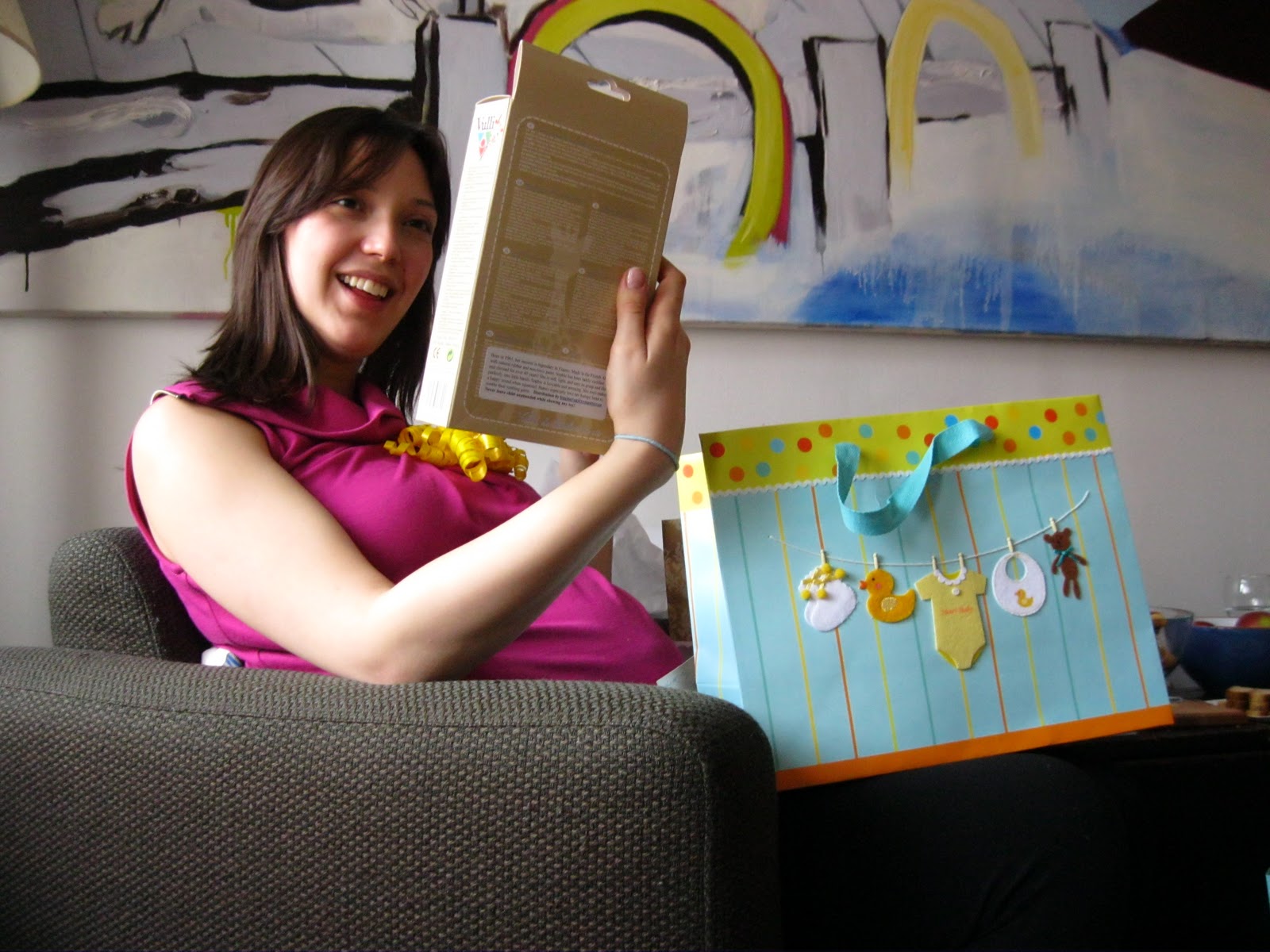
Eight months pregnant, receiving Sophie the Giraffe
at my interpretive baby shower.
I received our Sophie as a gift at our baby shower from dear friends Sam and Charlotte. It was a perfect gift because I never would have spent $26 on a classic baby toy myself, no matter how cute and hip. They also gave us a copy of Olivia.
Sophie spent the first few months of her life in her cute little box. I brought her out when the baby started teething. Sweet Baby James was immediately taken with her squeaky nature, long floppy neck, and particularly delicious hooves. From about November 2011, however, Sophie the Giraffe took a backseat in the toybox, left on her anatomically incorrect backside in favour of empty yogourt containers and measuring cups.
It was clear that Sophie's days were numbered. She was sad and lonely. She was also a very, very dirty girl. My attempts to clean her up -- including the time I brought her into the bath with us, which downgraded her bright little squeak to a forlorn squawk -- were futile. When I was hanging with other mama-baby dyads I could tell which Sophie was "our" Sophie just by virtue of her greying, grimy rubber. I figured I had two options: I could throw her in the trash like a normal mama or I could slice her open like I secretly always wanted.

Sophie's front and back sides, vertical incision along frontal (coronal) plane

What's inside Sophie the Giraffe?

Sophie's slightly damaged plastic and rubber 'reed'
(the little flap in the centre is the part that vibrates)
Cutting along the seams left by the rubber molding, I was happy to find that there was comparably little dirt, water, or dirty water organisms living inside Sophie. Just her squeaky valve, a plastic and rubber 'reed' that vibrates and produces the high-pitched sound when air is forced through it. Because Sophie can only contain a small amount of air inside her at any given time, the high-pitched sound comes out as an attractive, short little squeak. Having taken her into the bath with us, I probably damaged the reed's flexible parts, thus reducing its ability to vibrate and dampening the sound.


What new/hacked uses does this toy have?

Sweet Baby James is in two minds about Sophie's sudden death mitotic reproduction. In two pieces, she offers a bit more flop than before... But her hooves seem no less delectable.

In 2 minds about 1/2 a Sophie

More flop for your (26) bucks

And she's still delicious!
Bonus: Instead of making one little squeak, Sophie the Giraffe can now function as a great whistle! You can even play her kind of like a flute: just put your mouth on the reed and give her a good blow, intermittently tapping the other side. This will stop any baby mid-cry -- if you don't mind looking like an ass, because it looks like you're doing something naughty with Sophie's. In fact will make your baby very, very happy. And once in a while, desperate times call for desperate measures.

On history

Young sales associate: "Aw, he's so cute! Look at his cheeks, they're huge!"
Mama: "Yup, he was Winston Churchill for Halloween!"
Young sales associate: [blank stare]
Mama: "You know, like, the British Prime Minister?"
Young sales associate: [goes back to folding clothes]
Mama: "You know, he won the war against Hitler, Never never never never, never give up, bowler hat and jowls... Oh, never mind."

Winston Churchill needs his la-las

On science in the home

Baby (sitting on hallway floor, enthusiastically): "Waa, woo, gaarrgh!"
Mama (rushing out of the bedroom): "Qu'est-ce-qui se passe? Oh. It's an ant. That's an ant crawling on your leg. That's what they do. They're like crumbs but they move."
Baby: "Gaaah, gah gah!"
Mama: "Yes, now it's on your hand. Now it's on your arm... Let's go play with some blocks."

On feeding

"You know, sometimes I think the best way to feed the baby would be to just throw little bits of it onto the floor."

Book Review: Parachutes & Kisses by Erica Jong (MMm)

Title: Parachutes & Kisses

Author: Erica Jong

Publisher: Jeremy P. Tarcher/Penguin (reprint 2006)

Intended Audience: Women, people excited by Erica Jong

Genre: Fiction


One sentence that summarizes the author's take on babies/parenting: "Life is risk, she thought. Motherhood is risk too." Also, "children are the periscope of the dead."

What I loved: The narrator's willingness to bare all. Her self-indulgence validates mine.

What made me want to cry into my burpee cloth: Instead of searching for her late grandfather's masterpiece painting, at the end of the book Isadora decides that she is his greatest masterpiece.

How many M's?: MMm (2.5/5)


Erica Jong was one of the premier sex symbols of the 1970s, the Linda Lovelace of the literary world. She wrote Fear of Flying, a brutally honest account of her own -- sorry, her semi-fictional doppelgänger Isadora Wing's -- adventures in sex, marriage, love, and the seeming mutual exclusivity of the three. I enjoy Jong's work because it's so damn honest. Like, describing-the-urge-to-suckle-her-dog damn honest. Her writing is almost plotless, conversational in tone, and often repetitive. It is the mind of all the interesting, impulsive, artistic, ADHD women I know. 
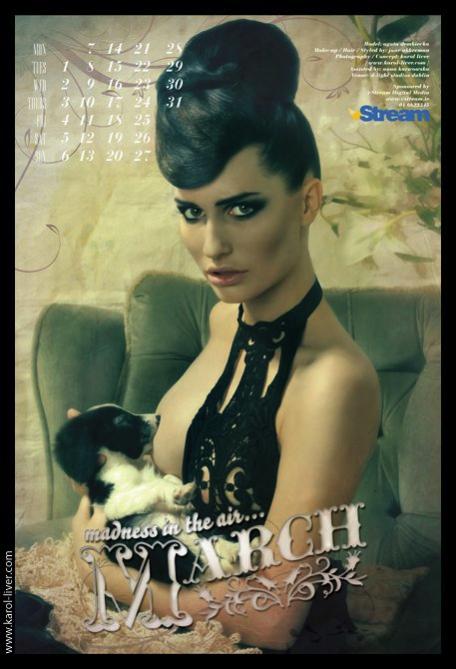
Woman (not Erica Jong) suckling dog


So I was delighted to find Parachutes & Kisses at a used book store in Vancouver. What luck! Not only do I providentially come across a third Isadora Wing novel, but it is about new motherhood. I'd read Fear of Flying while I myself was flitting around Europe in a depressed fugue not unlike her heroine's, and here Erica Jong came crawling back, ready to share the vicissitudes of motherhood by my side. 


Parachutes & Kisses chronicles Isadora Wing/Erica Jong's first year out of a divorce from "Josh," a man she deeply loved and is the father of their three year-old child. Josh is several years younger than Isadora, and much is made of her supposed middle-aged status. In 1984 it was unusual to have a child in your late 30s (just ask my mother, she had me at the ripe old age of 38 in 1984) but 20 (okay, almost 30) years later it seems quaint to worry about such a thing. Over the course of just one generation the average age of childbirth has climbed almost four years. 

About two thirds of the way through the novel, Wing meets another charming young man -- younger, even, than her ex-husband -- and commences an affair of epic proportions. There's a great sex scene, there's a hilarious moment where he swallows one of her diamond-stud earrings ("Oh...to have a life in which brilliant studs did not get nibbled off by brilliant studs."), and there is the classic unearthing of Isadora's insecurities as she throws herself into the abyss of loving someone who can never be her life partner. It's all very fun and interesting but... won't somebody think of the children?

Diamond studs:
$1,199 at Walmart.
That's one expensive, corporate crap, Ms. Jong.

At so many points throughout the book -- which I read while nursing Sweet Baby James -- I paused and thought, but where is her baby? How does she have time for multi-orgasmic sex, working out, fellating her ex-husband, dealing with mucked up finances, shopping for designer dresses, traveling to California, Russia and Venice, and even sitting down to try to write a book? She does it with the help of a series of nannies and occasional visits from the ex. And not without a good dose of mother-guilt. 
"Raising a child and making a living were no easy feats. One always felt divided. One always felt that one's vital organs were being torn apart." (p. 364)
But for the most part, Isadora isn't focused on 'making a living' in this novel. In fact, she finds herself unable to write. She's blocked and -- surprise, surprise -- she needs an exciting sexual relationship with a man to unblock herself. A classic trope. But in all that time Isadora spends discovering herself in the supine position, Isadora's child is suffering from mommy's inability to locate steady, consistent, loving childcare.
"She'd no sooner build an attachment than some catastrophe would intervene... The hot-and-cold-running nannies had been bad enough when Josh was there, but now that he wasn't, poor Amanda was making do as best she could. She held on to her rituals: the bath, the Muppets, the bedtime recital of the day's activities." (p. 163-164)
Pretty Woman:
to find herself, our heroine needs a man

From an outsider's perspective, and even from Isadora's own, it's obvious that her daughter needs more of her mother. This also applies to the book as a whole: its centre shifts from Isadora's commentary on new motherhood in the first half to disjointed escapades with her lover in the second. This plot twist is never really resolved, their relationship left hanging at book's end, their coupling's imminent doom spelled out in the Venetian clouds. 

It's a shame because Isadora is a loving mother and there is true plot-driving frisson in her desire to connect with her daughter. She sees her daughter as an individual and loves her fiercely. I want to be inspired by this bond, not regaled with another episode with the so-called "boy-toy" (as she describes her novel in the book's afterward, written in 2006). I know about romance. I know about sex. That's how I got to have a baby in the first place.

When she does, her comments on motherhood are honest and so apt, even thirty years later. Take for example, 
"When the baby cried, Isadora's breasts leaked. When the baby was brought into the room by the nurse, Isadora roused herself out of a dead sleep and sat up in the waterbed to take the little bundle into her arms. The little rosebud lips latched onto her nipple with a prodigious force -- the primal force of the universe, it seemed. And Isadora would look down on the suckling baby, feeling her womb contract and her eyes fill with tears -- but tears for what, she did not know. Tears for Mandy's future, or her own? Tears for the unknowability of any baby's destiny? Tears for her own changed state? For never again would she go anywhere without thinking of her child; it was almost as if that cut umbilicus, now useless and dried, had ceased to be a physical object and had become a powerful moral one, a matrix in which her whole life was bound -- so that never again would she make any decision just for herself." (p. 153)

Perhaps all this lost opportunity is just a reflection of the times: women educated in the 1970s were soldiering into the workforce in the 1980s. The assumption was that you could do either, but not both, career and motherhood. Maybe, just as the sexual exploits of liberated woman were not seen fit to print before Jong did so, the pain and ecstasy of motherhood was an invisible, untouchable subject. Not so nowadays (cf. um, this blog, and our first book review, Let The Baby Drive).

But every movement has its pioneers and Jong's honesty is such that even her brief forays into the essence of motherhood might still seem shocking now. She writes about the intimate, wordless connection between motherhood and death; about ambivalence toward pregnancy and her "bourgeois ovaries"; about the double-edged sword of having "help" from other people after birth (we need less of it, but we also need more). Who among us doesn't feel a little kinship with the following?

"No longer were Josh and Isadora ever alone. There was a baby nurse. There was a cook. There were all these people supposedly to help, but every one of them was as much a hindrance as a help. The baby nurse ate and ate and ate. She resented Isadora for breast-feeding and she retaliated in the classic baby-nurse manner: "Mrs. Ace," she would say nasally whenever the baby cried, "your milk's not rich enough -- your baby is starving to death." "

Bourgeois ovaries

Jong's work is readable because she terrorizes herself with the same steady hand with which she dissects others. She describes her own shameless infidelities, shameful vulnerabilities, and raw insecurities without stopping to remember that, hey, she's the author and she's in charge of this book. Parachutes & Kisses is like that time you wrote a drunken email to your ex and then decided to cc eighteen million other people, for profit. The Wing/Jong persona is crazy, funny, literary, and very much embodied; in short, I see myself in her. I only hope that I can channel my own version of Jong-craziness into attentive, full-time parenthood.


First Class, Baby (Part IV: Ten Tips for Traveling Alone with Infants and Other Dangerous Cargo)

On Christmas day I crossed the border and got my Green Card. Yes! We're home now (the new home, in San Francisco, where I live with my husband and son) and I've had a few days to look back and reflect on my six-week window into life as the single, itinerant mother of a ten month-old named after a Mojave desert plant.

Ocotillo, Mojave desert false cactus

What did I learn?

Oh, lots of things. Like how old unmarried men are drawn to young (presumably) unwed mothers like old unmarried moths to an insta-family flame. And how tough it is to be a single mom -- to be the only person who could possibly take the baby for his night-time walk and rush him to the toilet at six am and then boil some organic prunes without forgetting about them on the stove for two hours. I value my family and friends in a whole new way.

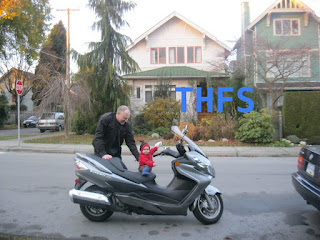
But the really important thing I learned was how to travel with a baby. Sweet Baby James has taken eight flights in his short life; he's also taken one VIA train ride, two commuter trains and countless buses, subways, a boat, cars... he even climbed a motorcycle for the purposes of taking a picture.


Here's how I do it.

Ten Tips for Traveling Alone with Infants and Other Dangerous Cargo

  1. Ditch the stroller. It is not easier to push your baby in front of you when you're also dragging a piece of luggage behind you and the diaper bag is falling off your shoulder. Plus, you have to take the baby out of the stroller when you're going through security, and again when you fold it up to store it when you get to the plane/train. Babywearing, on the other hand, rocks. You can leave the baby in the carrier when you walk through security, though the guard will stop you to wipe your hands for explosives (not the pooping kind, unfortunately). Babywearing will also save you when baby's fussing and you need to walk up and down the aisles. Plus, bored strangers are less likely to assault (read: try to pick up and cuddle) your baby up if he/she's in a carrier. I like my ring-sling because it also doubles as a blanket when baby goes to sleep (that's a lie, he never goes to sleep). Mine are home-made but they look like the Maya Wrap:

    ***Airports are also great places to check out the hottest in babywearing fashion. See the airport posts on Too Hot For Stroller!
  2. Pack light. Lighter than you ever thought you could. They probably have diapers, wipes, burpee cloths, nursing pads and other necessities where you are going. Just bring what you need for your travel time plus 24 hours (in case of delays) and find a pharmacy first thing when you wake up the next day.
  3. That said, having a portable changing pad/diaper kit really comes in handy. Public restrooms should have clean and safe baby changing facilities, but they don't. It drives me crazy (see photos: www.mamactivism.wordpress.com). This is what my Skip Hop portable changing station looks like:
  4. Pack even lighter. Yes, babies love to play with stuff but it doesn't have to be the locally-made, ethically produced organic toys they're familiar with. Your host's measuring cups, colander, coffee tin, old comb, recycling, etc. are all great options and you can leave them behind guilt-free. If someone decides to laden you with gifts (and they will), ship them home.
  5. Don't waste time trying to get baby to keep his hands to himself. OK so airplanes are nastydirty and the windows on the bus are grimygross. But the constant vigilance it will require and the fight that might ensue between you and the baby just isn't worth it. Pack some diaper wipes. Keep them at hand so you can wipe his. Think about all the immunities he's building.
  6. Accept Help. Your host wants to help you to the station? The airline allows you to board early? That withered old man is going to attempt to haul your suitcase up the stairs? Let people help because it makes them feel good. If help isn't forthcoming, politely ask for assistance. You are transporting the future of the world in your arms and they are rushing home to catch a Friends re-run.
  7. Make friends with the flight attendants. These are people who can make or break your journey and -- what luck -- they've made a career out of being helpful and cooing at infants! (they also watch out for thousands of people's safety -- and Alec "not a very unselfish man" Baldwin -- but that's another matter). When you're boarding the plane, pause and say hello, ask them how their day's going; show them your adorable little bundle. Then show them your boarding pass so they direct you to your seat. This way they know how to find you and shower you with attention: I had flight attendants offer to hold and carry the baby when I had to go pee; give me free meals, blankets and bottles of water; invite me to their gourmet first nations restaurant, stow my luggage at the front of the plane, let me change the baby in the first class toilet, and take pictures of us. Win!
    Our First VIA Train: taken by the ever-lovely attendant, Rachel
  8. Wear slip-on shoes. You have to take off your footwear at security these days. Boots with laces mean sitting down (as if there's a chair available) and bending over to get them off. Babies in carriers don't like it when you sit down and they hate it when you bend over. I know because I made the mistake of wearing my new boots because I was too lazy to carry them. It sucked.
  9. Carry written and notarized permission from the baby's other parent if you're crossing an international border. I forgot this and just barely squeaked into Canada. "Um, my husband knows I'm taking the baby to Montreal, I promise..." doesn't always cut it. You might also need a copy of the baby's birth certificate to prove that the person who gave permission is in fact the baby's other mama/papa.
  10. Don't worry about sticking to a routine. Traditional parenting philosophy predicts disaster (danger, danger, high voltage!) when a routine gets thrown off. But flight attendants were asking me, "Is your baby always this good?" and I don't think they were just being nice. Baby needs to know that although everything else is changing, you're there and not going anywhere (without her). I tried to focus on reading Sweet Baby James' cues and providing for them. It was more important to me that he feel content and comfortable than that he finish his breakfast (even if I had been burning cooking those damn prunes for two hours). He napped when he wanted to, nursed when he wanted to, alternately charmed or rebuffed strangers when he wanted to.
    Aside from the non-negotiable enactment of regular diaper changes, I let SBJ be the boss of SBJ. Even when he was a jerk and refused to engage in the best dual-baby-wearing-mama photo op ever.

www.toohotforstroller.wordpress.com
    The long and the short of it is that traveling with a baby can be fun. I felt like Sweet Baby James and I bonded in a whole new way when he managed to intimidate his sweet two-year-old cousin and not to poop in the middle of my visa interview. It felt exciting, liberating... Sometimes when we were roaming the streets late at night, whether attempting to find our next destination or just a moment's calm respite, I imagined we were following the steps of our nomadic ancestors. I am mama, hear me roar.